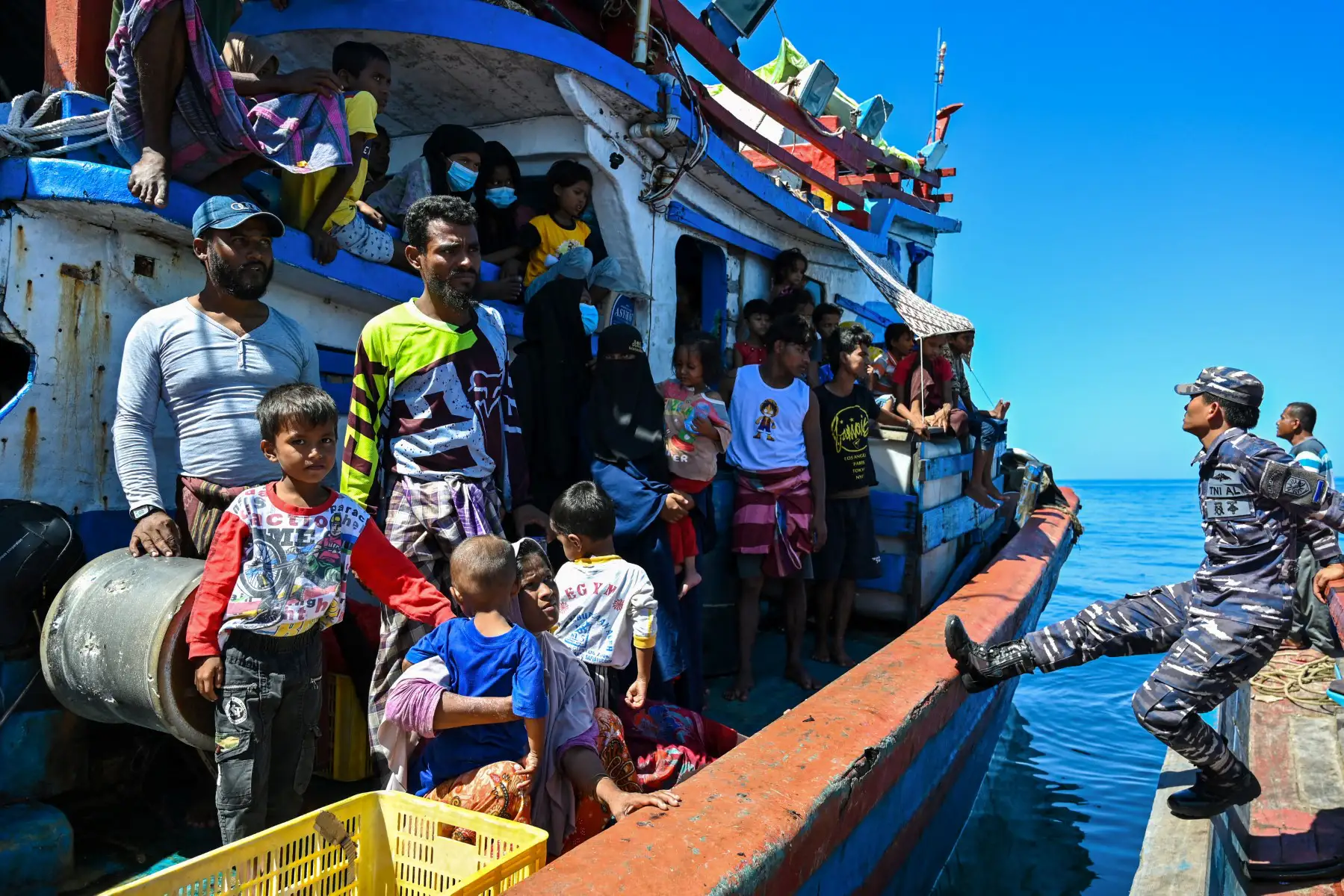
A recent social media post by a popular figure—framed as humour—depicted Rohingya people as inferior and physically repulsive. The backlash it sparked is a reminder that racism in Myanmar is not just offensive; it is deeply embedded in the country’s political and social fabric, with consequences far beyond online discourse.
The idea that Rohingya are “ugly as ogres,” contrasted with the supposed fairness and beauty of “real” Myanmar people, is not new. As far back as 2009, during the rule of Senior General Than Shwe, a Myanmar diplomat in Hong Kong publicly used such language in an official statement, at a time when Rohingya boat refugees were making global headlines.
This framing—linking physical appearance, especially skin colour, to human worth and national identity—echoes the racial hierarchies of fascist ideologies. In Nazi Germany, the “ideal” Aryan was defined by features such as fair skin, blue eyes, and blond hair. Similarly, Myanmar’s military, shaped by decades of authoritarian rule, has fostered a worldview that divides people along ethnic, religious, and physical lines.
After more than half a century of military domination, these ideas have seeped into broader society. Casual jokes based on skin colour and appearance are often normalised. But when such thinking becomes widespread, it becomes dangerous.
Reducing people to grotesque caricatures—likening them to monsters—amounts to dehumanisation. It strips individuals of their status as human beings. Psychologically, this process lowers the moral barriers to violence. Just as gamblers use tokens instead of cash to detach themselves from real loss, dehumanising language allows people to commit or justify acts they might otherwise find unthinkable.
Genocide does not begin with gunfire. It begins with words—with narratives that deny the humanity of others.
In 2017, during the military’s operations in northern Rakhine State, slogans such as “Make them sing the national anthem—if they refuse, shoot them all” circulated widely on social media. These sentiments reflected a mindset already shaped by years of dehumanising rhetoric. The violence that followed has since been the subject of genocide allegations in international courts.
Studies have shown that Facebook played a significant role in amplifying hate speech against the Rohingya prior to the violence. The platform’s failure to curb such content has even led to legal action.
Influential figures have also contributed to this climate. Sermons by prominent Buddhist monks have been cited as examples of rhetoric that appeared to justify violence. One widely criticised discourse suggested that killing millions might still involve harming only a fraction of “true humans,” implying that certain groups do not fully qualify as such.
Such ideas are not merely abstract—they shape real-world behaviour.
Myanmar’s education system has also played a role. For decades, a rigid, authoritarian model discouraged critical thinking and contextual interpretation. Classical literature was often taught through rote memorisation rather than analysis, reinforcing simplistic associations: fair skin with purity and virtue, darker skin with vice and inferiority.
In traditional texts, literary devices were used to symbolise moral qualities—villains described as dark or grotesque, heroes as radiant and fair. But without critical engagement, these metaphors were internalised as literal truths. Generations grew up equating physical traits with moral worth.
Combined with economic hardship and limited access to broader cultural perspectives, such thinking has persisted. Even individuals with higher education or international exposure may still carry ingrained biases.
The Rohingya issue is particularly sensitive. Political controversy has made it difficult for many to approach the subject objectively. Even those who embrace universalist or progressive ideologies often show discomfort when it comes to Rohingya rights.
This stands in stark contrast to core Buddhist teachings, which emphasise non-self and the absence of fixed identity. In principle, compassion should extend to all beings. In practice, many in Myanmar exclude Rohingya from this moral universe.
There are, however, signs of change.
The generation that came of age during the digital era—particularly those involved in the anti-coup movement since 2021—has shown greater openness to diversity and a willingness to challenge entrenched prejudices. The Spring Revolution has not only resisted military rule but also questioned long-standing social norms, including discrimination based on ethnicity, religion, and gender.
This shift has created space for more critical discussions about the Rohingya and other marginalised groups—an important, if often overlooked, outcome of the revolution.
Yet older patterns persist, especially among previous generations shaped by decades of authoritarian rule. Ethnic and religious extremism has not disappeared.
If Myanmar is to build a more inclusive future, it must confront these legacies.
As historian David Steinberg noted in the opening of “Burma: The State of Myanmar,” understanding the future requires a clear-eyed examination of the past. The lessons of history—both its achievements and its failures—must guide meaningful change.
Among the most urgent issues is the Rohingya crisis, which has already brought Myanmar to the brink of international condemnation for genocide. Addressing it requires more than political solutions; it demands a transformation in how people think, speak, and perceive one another.
Because long before violence erupts, it is language that prepares the ground.


