Last week’s earthquake in Myanmar is the latest of a series of unprecedented challenges the country’s people have confronted since the military junta attempted a coup on February 1, 2021. The quake’s effects have once again aggravated and highlighted the vulnerability of women, girls, and gender-diverse people, who often bear the brunt of impacts from disaster. The quake comes months after Typhoon Yagi, a massive monsoon that led to the deaths of 844 people in September 2024, disproportionately affecting women and girls. We fear the same will happen in the aftermath of the quake.
The military not only tends to neglect communities in need, but to politicise the response to disasters, weaponising aid by applying discriminatory criteria to its distribution and continuing to attack communities it suspects of connections to the resistance. Further compounding the problems of the junta’s usual response, it is virtually inevitable that the recent, massive withdrawal of humanitarian funding by the United States will make the disaster’s effects worse.
The urgent needs created by the earthquake, and the gendered dimensions of its impact, demand a response based on attention to the disproportionate share of hardship borne by women, girls, and other marginalised populations in Myanmar.
The junta’s response
Even with relief efforts underway, last week’s earthquake has revealed the military authorities’ characteristic negligence—and even hostility—towards communities in need. Even with more than 3,000 deaths confirmed from the 7.7-magnitude quake, some 4,500 more wounded, and more than 300 reported missing, the junta has continued carrying out indiscriminate attacks in affected areas, which have already caused at least 10 fatalities.
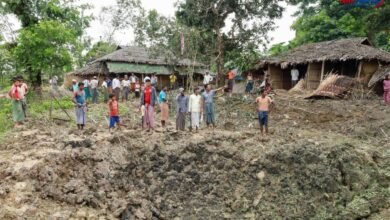
The air force has repeatedly targeted Karenni State since the disaster, including in a recent air raid on Hpruso Township using 500-pound and 300-pound bombs, showing how civilians are under threat from the junta even in areas spared from the worst effects of the quake. In its ongoing disregard for civilian life, which has been evident through the long history of dictatorship in Myanmar, the military has carried out more than 8,000 airstrikes in at least 162 townships since the 2021 coup. Even in the wake of unprecedented natural disasters and a nationwide effort to support the relief effort, the military junta has not hesitated to drop bombs.
The junta’s hampering of relief operations, ignoring appeals to permit immediate and unfettered access to survivors, and targeting of aid workers and first responders also present significant challenges. Based on the military’s record of aid mismanagement after past natural disasters, most recently Typhoon Yagi, civil society organisations have also warned of potentially disastrous long-term impacts as the junta prioritises its own power and political advantages over the needs of impacted communities.
Over the few days since the quake, the junta has allowed allies such as China, Russia, and India to run rescue and aid operations in affected areas while denying access to relief workers from less trusted countries such as Taiwan. In the US, the Trump administration has claimed it would provide “up to US $2 million” to support those affected by the disaster. However, these promises stand in evident contradiction to the recent dismantling of USAID, which has resulted in massive, agency-wide layoffs and an effective end to life-saving programmes globally, including in Myanmar. US planes and helicopters previously used in disaster relief efforts ‘never made it off the ground,’ according to the Washington Post.

Disproportionate impact on women, LGBTQ2I people, and the gender-diverse
Civilians are struggling to survive amid the uncertain conditions and broken infrastructure resulting from both natural disasters and junta attacks, suffering through deepening poverty, protracted displacement, psychological trauma, and spreading disease.
There is a clear and significant gendered dimension to the impacts of disasters, made even more stark by the Myanmar military’s mismanaged response, and further aggravated by funding disruptions. Civil society organisations, human rights defenders, and vulnerable groups—particularly women, LGBTQ2I individuals, and ethnic minorities—face significant risks, including arbitrary arrests, forced displacement, and violence.
The devastating losses from the earthquake pose additional challenges for women survivors and women’s organisations who have lost funding. Their work has been undermined, and may be permanently disabled, by the unanticipated breakup of long-established humanitarian networks and world leaders indifferent to the consequences of their actions for vulnerable communities.
The new, resulting gaps and impairments in the humanitarian landscape have had a dramatic impact on women and the gender-diverse. Disasters compound the effects women are already likely to experience from climate change, with rising temperatures and air pollution contributing to increases in preterm births, low birth weights, and generally poorer maternal health. Now, women’s access to prenatal and neonatal care, as well as mental health services, is increasingly at risk. Reproductive health access and services have also been compromised after the earthquake caused significant damage to potentially life-saving care facilities like clinics and hospitals. According to The Guardian, three hospitals were destroyed, and 22 sustained partial damage, straining the healthcare system and further limiting the services available to women.
Women are also likely to face economic hardship as the earthquake disrupts their livelihoods, with those working in informal sectors already typically among the last to receive aid. This is likely to compound the widening gender-wage gap and economic insecurity that women have experienced in Myanmar due to social pressure to leave the workforce, marry young, and raise children. According to UN Women, some 87 percent of unmarried women and close to 100 percent of married women lost their primary source of income in the Ayeyarwady Delta when Cyclone Nargis struck Myanmar in 2008.
The junta’s targeting of schools and the difficulty of accessing education for the displaced has also multiplied educational barriers since the coup. Lastly, the tension and anxiety and uncertainty arising from insecurity have led to increases in gender-based violence, which once again puts women at risk.
A localised response
Voices from the region are already sounding the alarm about concerns for women, children, the elderly, the disabled, and the incarcerated, appealing for a localised response to the earthquake.
“Aid efforts must prioritize gender-sensitive support by ensuring access to menstrual aid, safe shelters, and medical care for women, including pregnant women, new mothers, and infants,” said an emergency appeal from the group from Sister2Sisters, which aims to raise awareness about violence against women by the Myanmar military.
With thousands of people impacted by the earthquake, adding to the already harrowing numbers of displaced people in Myanmar, the need for humanitarian assistance has never been more urgent since the 2021 coup. Junta airstrikes have devastated infrastructure in civilian areas and targeted homes and villages, as well as desecrating schools, clinics and religious buildings.
The material assistance needed to mitigate these crises, including provisions of clothing and food for infants and pregnant women, is therefore constantly in short supply. In addition, indiscriminate shelling and bombing has isolated communities and instilled a deep, continual sense of fear among civilians. There are over 3 million internally displaced people inside Myanmar, and 20 million people in need of humanitarian assistance, including 6.3 million children and 7.1 million women, who commonly bear the brunt of the hardship from displacement.
The hundreds of homes and shelters destroyed in the earthquake will inevitably increase these numbers while limiting options for victims of domestic violence, undermining women’s agency to leave violent situations, and narrowing pathways for gender justice. Furthermore, the presence of junta troops in affected areas is likely to increase amid the emergency response, and the military has often used international crises to distract from the crimes it regularly perpetrates. Shortages of food and lack of reliable sources for potable water will add to the hardship and health issues in impacted areas, where health services have already been hampered by the junta’s brutality.
In the face of these difficulties, only options that do not rely on the military regime as a partner in relief efforts can be trusted as viable. Locally led organisations, particularly those run by women, are far more reliable in ensuring that life-saving humanitarian assistance reaches those in need through cross-border channels.
The safety of civilians vulnerable to junta attacks, especially women and children, will also be impossible to guarantee unless the United Nations Security Council imposes a no-fly zone, redressing the danger of airstrikes. Additionally, as civil society organisations continue to demand, there must be targeted sanctions on the junta’s suppliers of aviation fuel and a global arms embargo. Localised approaches and collaboration with women leaders are the only adequate answers to appeals for the protection and safety of women and girls under threat.
The headlines about the earthquake that have dominated the news cycle about Myanmar since last week should serve as a reminder. As with all the crises that have devastated Myanmar for decades, the people’s resilience in the face of formidable challenges must not fade from the world’s attention. Providing aid that is sensitive to the disaster’s disparate impact based on gender is crucial for survivors, and their needs must be addressed through reliable and dignified pathways.
–
Maw Baw Meh is an advocate for women’s and human rights, raising awareness and bringing about change in regional and international communities. Her work is focused on Karenni State. She is dedicated to supporting survivors of violence, promoting gender equality, and ensuring that marginalised groups, especially women, have a voice in the decisions that impact their lives. Through her advocacy work, she strives to create a safer and more equitable future for women and vulnerable communities in Myanmar.
Maggi Quadrini is a women’s rights advocate who provides technical assistance to community-based organisations along the Thailand-Myanmar border, focused on gender equality and localised solutions.