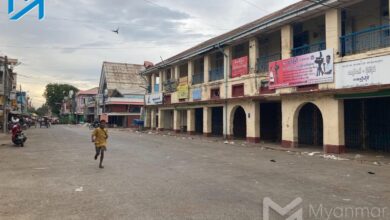
Although life was brought to a halt when the iron gates closed, the outside world had changed completely by the time they reopened.
For those released after long prison sentences, life outside prison walls is far from easy. They must rebuild their lives amid social indifference, economic hardship, persistent security risks, and lasting emotional trauma.
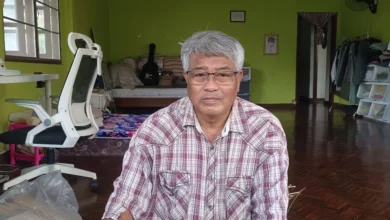
More than a year after his release from Myingyan Prison in Mandalay Region, Htoo Aung* continues to struggle with this new reality.
Before the military coup, he was his family’s main breadwinner, with a steady income that kept the household secure. Now, Htoo Aung says those days are long gone.
“Because of our political background, employers are often unwilling even to speak with us, let alone hire us. That’s why, when looking for work, you cannot disclose that you are a former prisoner,” he said.
Over the past year, he has changed jobs at least eight times. He said that even in workplaces where employers were supportive, he often felt compelled to resign out of fear of official inspections or due to the presence of police or other armed personnel.
He added that although he is no longer physically behind bars, his trauma and mental state make him feel as though he has not truly left prison behind.
While he was in prison, a poet friend sent him an encouraging message: “Older brother… the only difference is between confinement in a narrow space and confinement in a wider one. We are in this together.”
Today, Htoo Aung says those words feel painfully true. He added that in everyday life, he is often filled with a deep sense of insecurity. Like many other former political prisoners, he says he has lost any real sense of mental freedom.
Upon returning to life outside prison, some bear not only emotional scars but also chronic illnesses caused by the physical torture they endured as prisoners.
Kyaw Thu was released after serving more than three years in Mandalay’s Obo Prison for protesting against the military coup. Severely beaten during interrogation, he said he now requires daily medical treatment for back pain and kidney issues.
“When the weather turns cold, my injuries ache and throb. I also have difficulty urinating, and there are times when I am unable to pass urine at all,” he said.
But like other former political prisoners, he is also extremely sensitive to the pervasive sense of unease that permeates almost every aspect of life in society under military rule.
“You are outside the prison, but you are not safe. And it’s not just me—everyone, including business owners, the wealthy, and the poor, is living under constant risk of arrest at any time,” he said. “In reality, everyone feels imprisoned.”

Pain and pride
But this profound dread of the authorities is not the most painful part of life after incarceration. Even harder to come to terms with is the cold reception that former prisoners sometimes receive in their own social circles.
People who were once their closest friends now avoid them out of fear of being implicated. Kyaw Thu described how some former associates made thoughtless remarks like “You went to prison because you didn’t know how to behave,” or “You wanted to act like a hero, so you deserve it.” Such comments always landed like a heavy blow to the chest, he said.
“Just sitting at a teahouse, some people act as if they’re afraid they’ll be arrested for being seen with you. Some get up and leave when you arrive, while others don’t dare greet or speak to you.”
Yet, amid this isolation and criticism, he reflects on having fulfilled his duties as a citizen and says he feels a sense of pride in having been imprisoned for it.
“Even now, I take on whatever duties I can and participate wherever I am able,” he said, adding that he also shuns those he no longer considers worthy of friendship.
“I have nothing to do with anyone linked to the military, or working as government employees, even if they’re my relatives. I keep my distance from them,” he said.
While the experience of prison life can cause many relationships to fray or fail altogether, it can also make others stronger. Many former political prisoners survive through solidarity, helping each other find work or offering other forms of assistance. And those still behind bars are also not forgotten.
Some political prisoners will immediately take on any available job after their release, just to earn enough money to support their former cellmates.
“Whatever you say about life after prison, at least out here you can work and feed yourself. Those inside face extreme hardship. If they fall ill, there is no medicine; if their health deteriorates, they are left to die,” said Kyaw Thu.
“A female political prisoner I know sells flowers at bus stations, struggling to earn money just to afford care packages for those inside prison. It is truly admirable,” he added.

Help from outside
Meeting even the most basic needs of prisoners is no easy matter, however. Whereas 100,000 kyat—about US$25—was once enough for a full week’s supply of food and essential goods, today it barely covers the cost of a few meals and other items.
This has forced some families to send fewer care packages, or to reduce the amount they include in each one. In a prison system that doesn’t even attempt to meet the nutritional needs of inmates, this can have serious consequences for their health.
While former political prisoners do what they can to help, even as they struggle to make ends meet, protecting the physical and mental well-being of inmates also requires a more concerted effort from others outside of prison.
To some extent, this gap is filled by the International Committee of the Red Cross, which helps families cover the cost of trips to prisons far from where they live. This is an invaluable contribution, as prolonged separation can make it more difficult for prisoners to readjust to life after release.
But there are also civil society groups and grassroots citizen aid initiatives, often organised online, that seek to ease the extreme privation imposed on prisoners by Myanmar’s military junta. These groups go by names like “Htaung Win Sar Poh Kya Mae” (“Let’s Send Prison Care Packages”).
For political prisoners who have been physically released from the regime’s repression but continue to live with the lingering effects of trauma, support for psychological rehabilitation is also available.
The Assistance Association for Political Prisoners (AAPP), a group that has long monitored prison conditions in Myanmar, provides support to former political prisoners experiencing mental health issues such as PTSD, depression, and anxiety, including online training courses on mental health and self-rehabilitation.
“We provide psychological support to former political prisoners within our reach and to those who contact us. We are also conducting psychological training for recently released political prisoners. Part of this training aims to reduce misconceptions about mental health and to help connect them with professional support when needed,” AAPP member Aung Myo Kyaw told Myanmar Now.
According to the AAPP’s latest figures, the regime continues to hold more than 22,000 prisoners on charges related to their political activities, while nearly 9,000 have been released.
For those already adjusting to a life that has left them behind, and the others who will follow, more needs to be done to ensure that their freedom is fully restored, in both body and mind.
A decade of reporting at a cost
In 2025, we marked the 10th anniversary of Myanmar Now. In Myanmar’s history, journalists are often the first targets during political repression. We founded this outlet during a brief window of stability, starting with a small team in a modest office in downtown Yangon. Our goal was simple: to report on injustices that had been silenced for decades. In many countries, justice is sought through courts and police. In Myanmar, these institutions have historically been instruments of oppression.
From the start, we committed to reporting without discrimination—regardless of ethnicity, religion, or citizenship. We believe our work should be accurate, deeply sourced, and strong enough to serve as a historical record.
We also believe journalism should be a force for positive change, and that our primary readers should be the people of Myanmar.
That belief came at a cost. Members of our team and others associated with Myanmar Now have endured long legal battles, physical assaults, arrests, and torture. Despite these hardships, Myanmar Now continues to report the news—thanks to the resilience of our team, the courage of our sources, and the trust of our readers.
Please subscribe to support a free press in Myanmar.