The catastrophic earthquake that hit Myanmar on March 28 has destroyed nearly 90 percent of homes in Sagaing City, northern Myanmar, with the death toll now exceeding 100, according to local residents and relief organisations.
As of Monday, over 100 bodies have been recovered from Sagaing City, with efforts continuing to retrieve the remaining victims.
Immense damage has overwhelmed the city, according to an official from the Sagaing-based Thukha Kari Social Aid Association.
“The collapsed buildings require heavy machinery to excavate, with each site taking one to two days to clear,” the official said. “ There are many such sites, and excavation is ongoing at five locations.”
He added that rather than focusing on repairing damaged homes, there is an urgent need for water, food, and shelter. And due to the large number of bodies that are being pulled from the wreckage, they are being buried in mass graves after notifying family members, the official added.
“Where families consent to burial, five to 10 bodies are being buried together when possible,” the official said. “Similarly, for cremation, five to 10 bodies are cremated on open-air pyres.”
The people of Myanmar, who were already facing an increasingly violence civil war, economic despair, and the COVID-19 pandemic, are now suffering from the devastation caused by a 7.7 magnitude earthquake.
On March 31, the junta announced that the earthquake has resulted in 2,065 deaths, 3,900 injuries, and nearly 300 people still missing. At the same time, remarkably, the military rejected ceasefires across the country even while resistance groups and the National Unity Government (NUG), the democratically elected government in exile, declared a pause on all fighting for at least two weeks.
With access to and from Sagaing City now restricted, rescue efforts are being conducted solely by residents. Locals told Myanmar Now that the air is heavy with the stench of bodies trapped under the rubble, as much of the city has been largely turned to rubble, according to a Sagaing-based social worker.

“With only local residents carrying out rescue efforts, retrieving bodies has been a slow and difficult process,” he said, requesting anonymity. “Each recovery takes hours, and many bodies have already decomposed and swollen.”
He stressed the need for heavy machinery to retrieve bodies and urged for immediate support, including water, food, and emergency shelters.
The junta council has announced a national mourning period from March 31 to April 6 in remembrance of the lives lost and the destruction caused by the earthquake. National flags will be flown at half-mast throughout this period.
The US-based United States Geological Survey (USGS), which tracks earthquakes worldwide, estimated on March 29 that the powerful earthquake in Myanmar could lead to between 10,000 and 100,000 fatalities.
The feeling of hopelessness is beginning to set in as the reality that international rescue teams are being kept far away from Sagaing city. Civilians must respond to the disaster solely by their own sheer will.
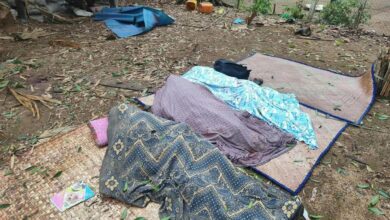
“People are sleeping out on the streets with only mats, blankets, and pillows,” a Sagaing resident said. “The cold, windy nights have already made some fall ill, and rebuilding will be a long and difficult process.”