Ross Dunkley, now 68, stood in the soft morning light in Perth, relaxed but weathered, a navy-blue pullover zipped halfway at the neck. Behind him rose the sandstone walls of a church—far from Yangon, where two decades earlier he helped create the Myanmar Times, a newspaper that would become Myanmar’s most sophisticated military intelligence influence operation.
Dunkley does not deny that role. Living a largely solitary life in Perth, he speaks with the candour of someone no longer defending a project. “Of course, it benefited military intelligence and it benefited the military government,” he said. “Everyone got benefits out of it. There was very little downside.”
Dunkley entered Myanmar in the late 1990s with experience operating media in tightly controlled environments, including Vietnam. He believed engagement—not isolation—was the only way journalism could exist under authoritarian rule. That belief shaped the Myanmar Times, which he co-founded with Australian investor Bill Clough and Myanmar partners closely linked to military intelligence.
From the outset, the project was approved at the very top. Dunkley recalled being introduced by Brig-Gen Thein Swe to intelligence chief Khin Nyunt. “Khin Nyunt said, ‘Oh, here’s our man,’” Dunkley said, laughing. The proposal was later endorsed by junta leader Than Shwe, who ensured the paper reached every ministry and military office.
Censorship, Dunkley acknowledged, was never formalised. There was no official board or written rules. Instead, editorial control operated through personal relationships. Sensitive front pages were discussed with Thein Swe, who sometimes took proofs to consult Khin Nyunt directly. “Often the Myanmar Times would be used by the government as its mouthpiece to respond to international criticism or sanctions,” Dunkley said. “By de facto, the Myanmar Times became a forum in which the military could try and project the real opinion on what was happening.”
He described how the paper functioned as an English-language editing service for the junta. “I actually rewrote the ‘four causes,’” he said, referring to the military’s core propaganda slogans. “I rewrote them so they sounded a little bit more upbeat in English.”
Military intelligence also commissioned the paper directly. After the September 11 attacks, Dunkley said MI ordered the Myanmar Times to produce a glossy, 128-page magazine portraying Myanmar’s “tribute” to 9/11. “We produced this magazine for MI… It looked like Life magazine,” he said. “They told us to do it, and we did it within two weeks.”
The reporting was then recycled abroad. “They were using us,” Dunkley said plainly. “They were sending our stories to Congress and to lobbyists. That was the rules of the game. I didn’t mind it.”
Commercial interests were tightly interwoven with journalism. Dunkley acknowledged that he pitched the paper as a way to create opportunities for Australian investors. “I emphasised that having a media presence would open political doors for us to pursue bigger projects,” he said—projects that included oil and gas exploration by his partners. A junta minister later told him that concessions were granted largely because of the Myanmar Times.
Asked directly whether the paper functioned as propaganda, Dunkley did not equivocate. “Yes, exactly.” He paused, then added: “It benefited MI, it benefited the government, it benefited the partnership. Everyone got something out of it.”
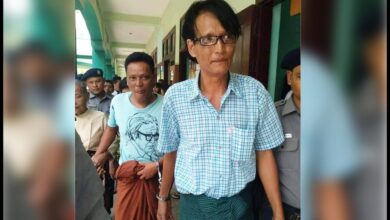
Dunkley’s personal reckoning came later. He was jailed twice in Myanmar. During his final period of detention, he said his wife left him. He did not express resentment. “It was fair,” he said quietly—an acknowledgment that the costs of his choices had extended far beyond himself.
When he was released in 2021, as Myanmar slid back into full military rule, Dunkley left the country for good. He returned to Perth, where four generations of his family had lived, and took up work with a mining company, returning to an industry that had long intersected with his Myanmar ventures.
Before we parted ways, I asked him one final question: whether he would ever consider going back to Myanmar—now again under military rule, much as it was when he first arrived in the late 1990s. He did not hesitate. No, he said. Myanmar had given him a great deal—purpose, prominence, influence—but it had also almost destroyed his life. Two prison terms, a collapsed marriage, and permanent exile had closed that chapter for good.
That tension—between engagement and complicity, opportunity and consequence—lies at the heart of this investigation. Ross Dunkley did not merely witness Myanmar’s experiment in media capture. He helped build it, lived with its rewards, and ultimately bore its costs.
(Note updated Feb 19, 2026): Ross Dunkley was first arrested in 2011 for assaulting a woman and on immigration charges in Yangon. After over a month of period of pre-trial detention, Dunkley opted to pay a fine to avoid a six-month jail term and was released with time served. In 2018, he was arrested again in Yangon and subsequently sentenced to 13 years on drug charges. He was later released under a mass amnesty in April 2021, following the February military coup.