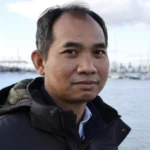
Shona Kirkwood, an educator and activist whose work opened pathways to higher education for Myanmar students shut out by poverty, dictatorship, and war, has died at the age of 61, leaving behind a legacy that stretches across Myanmar’s media, civil society, ethnic resistance movements, and democratic institutions.
Modern Myanmar has been shaped by decades of military rule, civil war, and the gradual collapse of public institutions. Among the hardest hit was the country’s education system. By the 1990s, universities functioned largely in name only, producing graduates with limited prospects for any real advancement. For political dissidents, ethnic minorities, refugees, and the poor, access to higher education had become almost impossible.
While military elites and their cronies continued sending their children abroad for education, countless young people from ordinary backgrounds were denied a chance to develop their full potential.
It was in this environment that Shona Kirkwood began building a network of education initiatives from 1996 onwards, including the Thabyay Education Foundation, the Border Programme for English Education, and scholarship support networks dedicated to helping some of Myanmar’s most marginalised communities access higher education.
Through Thabyay and related initiatives, she supported students from refugee camps, border communities, and conflict zones. Her work ranged from post-secondary and English-language programs to scholarships, university placements, and support networks linking Myanmar students to institutions overseas.
She also helped build an alternative education system for people excluded from Myanmar’s collapsing state institutions or who had few opportunities for advanced study due to the lack of international recognition for ethnic education systems.
Many who took part in those programs later went on to serve in Myanmar’s democratic movement, ethnic resistance organisations, media, civil society groups, regional institutions, and international organisations, including the United Nations.
My own experience is perhaps typical of many who have benefited from Shona’s work. A few years after I was released from prison, where I had spent the prime years of my life, her organisation helped me pursue a university education in Hong Kong. As someone without a dollar to my name and no connection to the outside world, this was a blessing of immeasurable value.
There were many stories like this.
One former student recalled how his dream of further education was blocked by the fact that he grew up in a refugee camp, where his years of diligent study were not recognised by universities abroad. Shona encouraged him not to give up, and in the end found ways to help him to get into schools in India and Thailand. From there he went on to pursue legal studies in Hong Kong through networks connected to Thabyay, enabling him to become a respected lawyer.
Many others from remote ethnic communities or migrant families displaced by conflict and poverty can recount similar tales of how Shona’s organisation helped to lift them out of their limiting circumstances.
Border-based education and scholarship initiatives developed over the past three decades would likely have looked very different without Shona’s leadership and commitment, according to friends and former colleagues.
Liz Tydeman, senior program manager at the Swedish Burma Committee and a former project manager for the Burma branch of Open Society Foundations, described Shona as “one of a kind.”
“Fiercely and unapologetically passionate, yet also deeply kind, gentle, warm-hearted, and extraordinarily generous,” Tydeman said. “She changed countless lives for the better.”
Under Shona’s leadership, Tydeman said, Thabyay evolved from a university preparation program for a relatively small number of students into a much broader education network reaching communities across Myanmar.
The organisation also partnered with local education centres rather than replacing them, an approach that helped strengthen community-run initiatives across the country.
Tydeman said Thabyay built extensive relationships with universities across the region to secure tuition reductions and fee waivers for Myanmar students, while also continuing to support students academically and personally after they entered university.
“It would be difficult to find a foreigner who has contributed more to Burma’s future than Shona,” she said.
“Thanks to her commitment and drive many thousands of young people were provided with a quality education and, in turn, returned to their country to contribute in meaningful ways.”
Saw Kapi, Thabyay’s former executive director, said Shona was a driving force behind the organisation’s mission to give Myanmar’s most disadvantaged students a chance to reach their goals.
“Even before my time at Thabyay, I knew of Shona as a respected leader in the field of education and scholarship opportunities for students from Myanmar,” he wrote. “She was a steadfast supporter of students from across all ethnic backgrounds.”
After leaving Thabyay in 2012, Shona went on to work for the World Bank, where she managed the grant for the Myanmar Extractive Industries Transparency Initiative, supporting important reforms to Myanmar’s corrupt natural resources sector, before the country was suspended from the program as a result of the coup.
Shona died in Chiang Mai on May 23 after a two-year battle with brain cancer. She is survived by her husband Aung Naing Oo and their three children, and remembered by countless Myanmar students who would never have been able to realise their dreams without her tireless efforts.