For refugees in Myanmar’s near abroad, the story of recent decades has been a series of disappointed hopes.
When Banyar Zin and his family returned to Myanmar, their home country, after the 2015 general election, they had no expectation they would be forced to flee again in just a few years.
The family had been staying in the Nu Po refugee camp in Thailand’s Tak Province for years but felt it would be safe to go back home after the landslide victory of the National League for Democracy (NLD) party in that election. He recalls that they were filled with optimism about the future at the time.
“That was our government, chosen by the people. We had faith, we had hope, and we believed it was finally time to return, so we did,” he recalled. “Those moments are still unforgettable, as we returned of our own volition, following our own plans.”
Banyar Zin had dreamed for years of building a peaceful life for his family under a government committed to good policy, he said, but this aspiration was shattered when the military, led by its commander-in-chief Senior General Min Aung Hlaing, seized control of Myanmar’s government ministries in February 2021.
The Myanmar military has long been an oppressor of Banyar Zin’s Karen ethnic community. With the generals back in power, he felt compelled to protect his family by again moving away from the hometown he loved, seeking sanctuary over the border.
He suffered another disappointment recently when the administration of United States President Donald Trump imposed new restrictions on asylum seekers’ entry to the country and cut off aid flowing to Myanmar’s displaced people.
This not only posed an immediate threat to his and family’s wellbeing but also made the possibility of resettling in a safer country more remote.
At the same time, the military junta’s escalating attacks on protesters, resistance groups, and the broader civilian population—on the Thai border and throughout the country—have also made any prospect of going back home unthinkable.
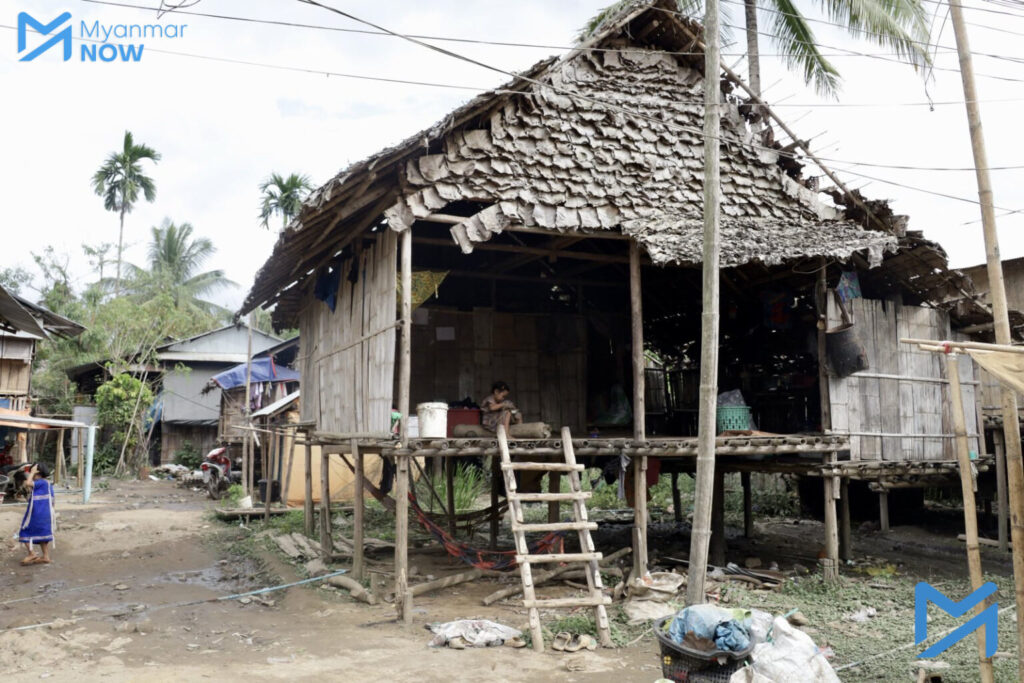
Camp life
There are nine refugee camps in Thailand’s border provinces of Mae Hong Son, Tak, Kanchanaburi, and Ratchaburi, serving as shelter for around 100,000 refugees from Myanmar.
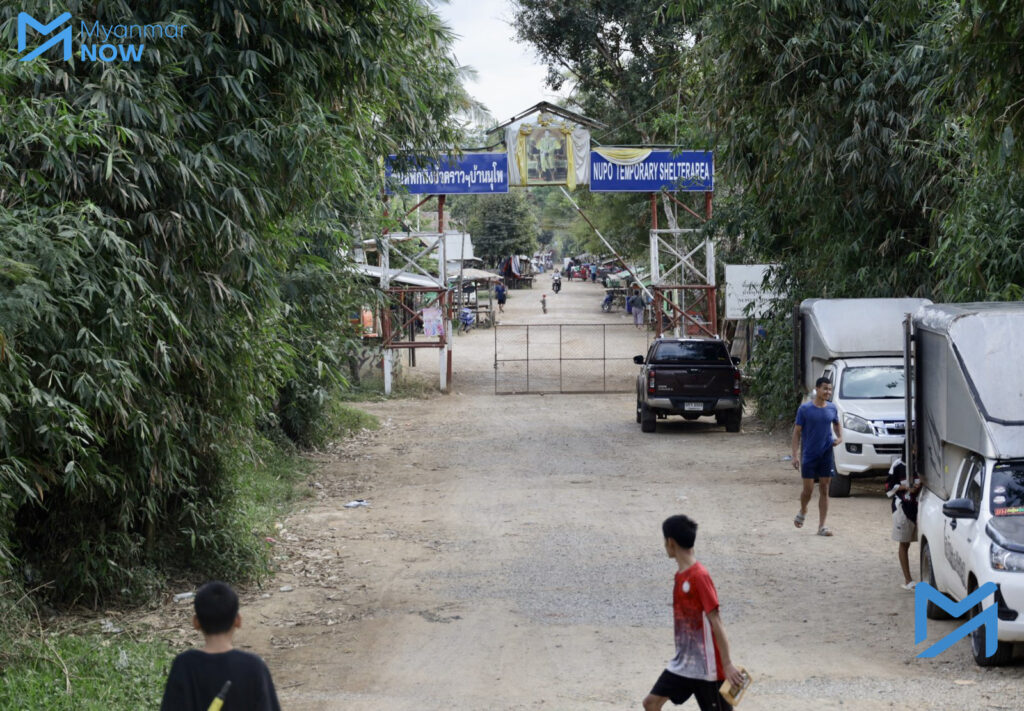
Founded in 1997, the Nu Po refugee camp in Tak Province—opposite Kyainseikgyi Township, Karen (Kayin) State—reportedly houses more than 10,000 inhabitants, mostly Karen people fleeing the incessant battles between junta forces and ethnic armed groups near the border. However, there are also people of Kachin, Rakhine, Rohingya, Bamar, and other ethnicities from other parts of the country.
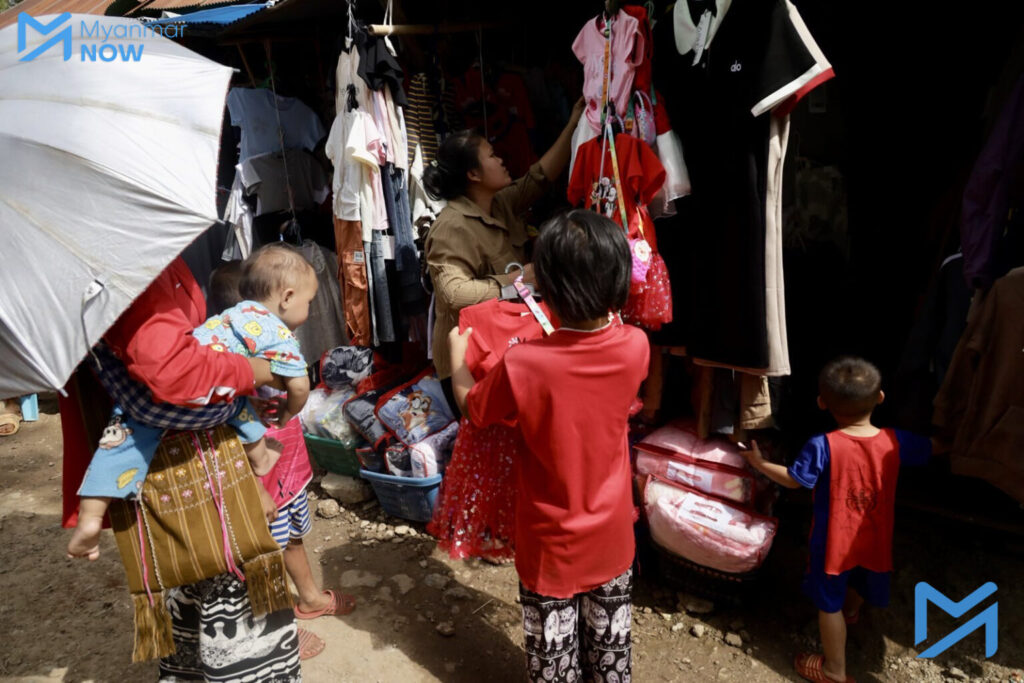
Banyar Zin, now 51, lives with his family in one of the bamboo-walled huts that line the paths running through the camp, roofed with thatch, tarpaulin, or corrugated metal and sitting alongside shops, schools, and temples.
While safe from the violence in his home country, he is still deeply troubled by the constant news of people’s suffering under the Myanmar military’s attacks.
“Life in Nu Po refugee camp is far safer than in Myanmar. Here, we can live freely and sleep peacefully, without any threat to our lives,” he said. “I fear for those who have stayed in Myanmar, whose lives are at risk. I hope they can be safe like us… someday soon.”

Another refugee named Than Lwin, 68, said he first came to the camp in 1997, fleeing the military’s offensive operations in Karen State. He left his house, farm, livestock, and all his belongings to escape the war and settle at Nu Po, which was then little more than farmland grown wild and rugged mountains.
“This used to be woods, and that was farmland,” he said, gesturing toward the football pitch next to the camp.
“This area where we’re talking was once a lake, and this road, now used by cars and trucks, was only passable for carts. When we were brought here and told it would be our home we picked up our knives and sticks and made ourselves a place to live,” he said.
Many of the wooden and bamboo structures the refugees built back then are still standing, but only after years of constant repair and upkeep.
Than Lwin was close to 40 when he first arrived at the camp and already a father of three, but one of his children died while they were living in the camp. He now has seven grandchildren.
Like Banyar Zin, when the NLD and its leader Aung San Suu Kyi were elected in 2015, he began to think about how to return home.
“I thought our country had finally found peace,” he said. “I planned to return to farming, to chop wood and work the fields. But after Min Aung Hlaing seized power in a coup, I don’t feel the will to pull up a blade of grass. We have endured this for so long. It was the same during the 8888 uprising. Every coup brings loss.”
Support cut off, lives upended
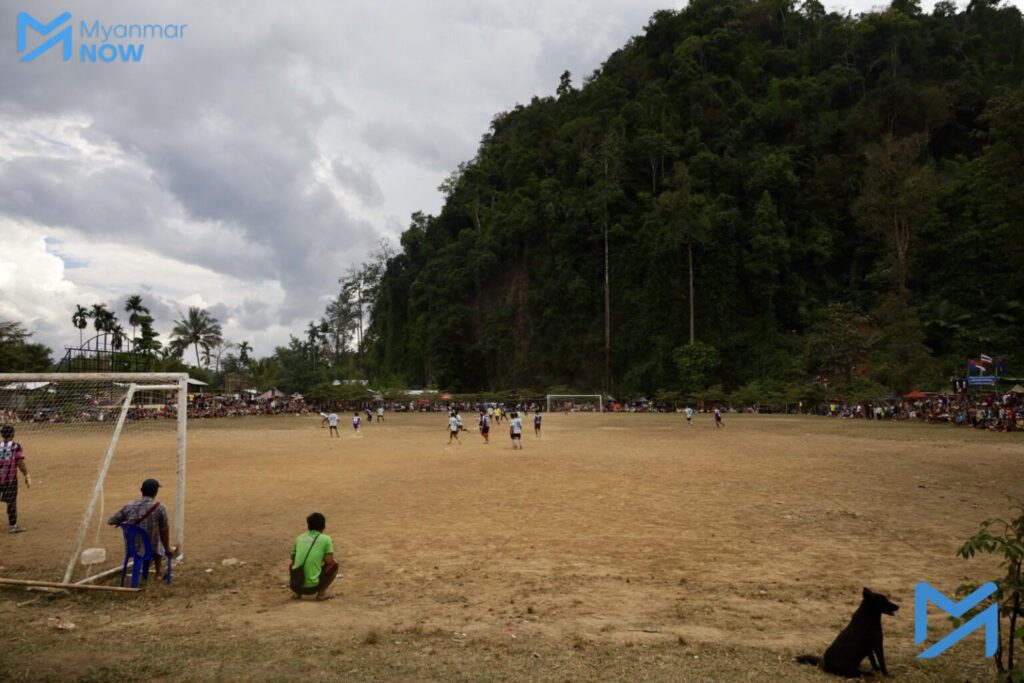
On December 13, 2025, refugees at Nu Po camp put on their best clothes and assembled on the football field near the camp.
The camp holds an annual Karen New Year Festival. This year, camp elders maintained the tradition, organising football matches, plays, Lethwei (Burmese boxing) fights, and other events, with residents of the camp gathering to watch or take part in the festivities. Music, voices, and delicious smells from food stalls and grills filled the air.
However, while the festival usually affords a rare opportunity for the camp’s residents to set aside their worries and enjoy themselves, this year the anticipation of losing vital benefits weighed heavily on their minds.
Nearly 9,000 miles away in Washington, the Trump administration had decided to halt foreign aid to people in need around the world, including struggling refugees on Thailand’s border with Myanmar.
The cessation of aid will inevitably have serious consequences for refugees, said Thi Thi Win, 49, who has been living in the camp since fleeing Thaton, Mon State 19 years ago.
“We won’t receive any aid after this year,” she said at the New Year’s festival. “My husband has heart problems, and I have diabetes. You can smell the smoke from that oil pot, where they’re making fritters. People’s health here will only worsen over time, leaving us with nothing but illness.”
“Since my husband and I have health problems, our children have to shoulder part of the burden and help with vending. We don’t get food rations anymore, and we’ll have hospital bills to pay soon,” she continued. “Because my husband has a heart condition, we need to get him an ID for emergencies, which they say costs around 2,500 baht [US $80]. This is very difficult.”
The funds for food rations in the camp will stop in 2026. Most countries have only sent temporary or emergency aid to Nu Po and other refugee camps on the Thai border, with the US as the only source of steady humanitarian assistance for some five decades—support that is now coming to an end.
Around 60 percent of aid for the nine border camps came from the United States before the Trump administration cut off funds for food rations in August and September 2025.
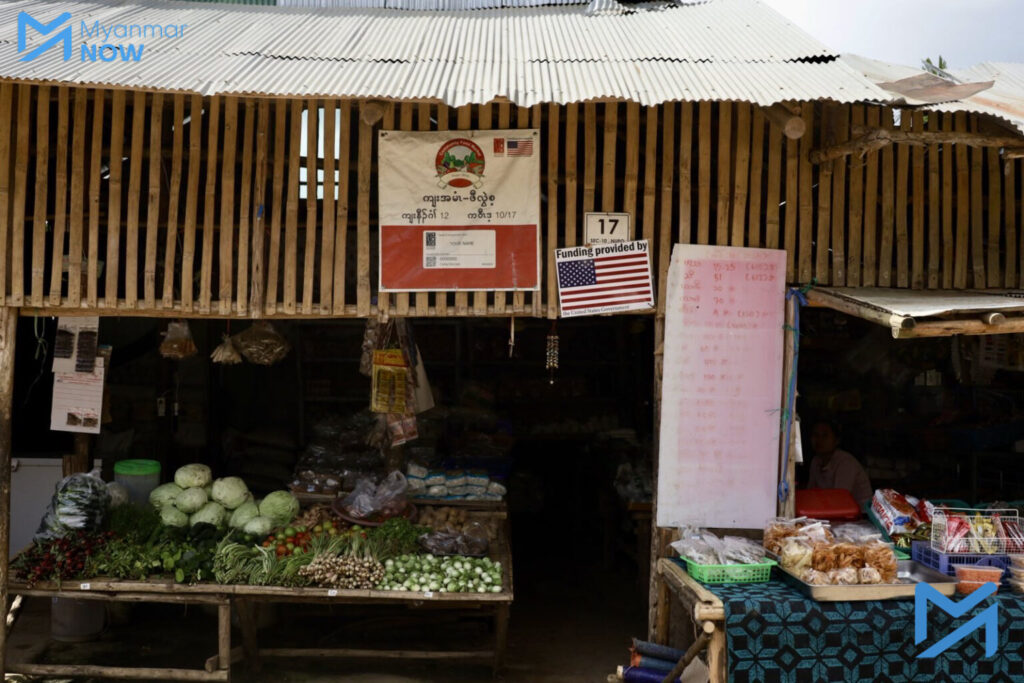
Refugees in the camps were classified into Most Vulnerable, Vulnerable, and Standard categories, with those in each category receiving, respectively, 300 baht (US $9.50) per month for food rations, 360 baht (US $11.40), and 400 baht (US $12.70). These amounts are now set to be cut or eliminated entirely.
The funds—transferred using electronic cards accepted in designated stores—were modest but made a vital difference in people’s lives. Without them, life will inevitably become more difficult for people in the camps, according to Banyar Zin.
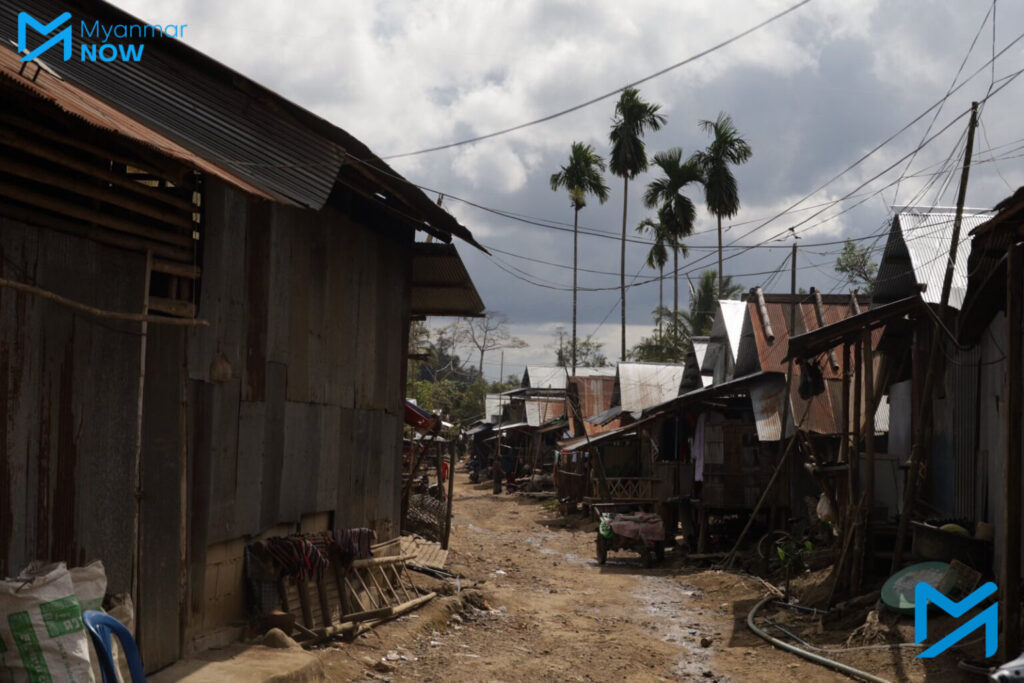
He said his family could get by selling pork skewers at the camp, but most refugees did not have a steady income and made their living through day-wage or seasonal jobs, such as working on construction sites or as farmhands during harvests, with others selling the wild vegetables they could forage in the woods.
With such meagre earnings, they usually needed transfers from relatives working abroad to supplement their incomes, he added.
Some hope remains. When aid from the US stopped, Thai authorities finally began allowing refugees from Myanmar to work legally, despite having denied them permission for more than a decade.
However, Thai employers often pay foreign workers less than minimum wage and deny them required benefits, and many refugees are unwilling or unable to accept employment that requires separation from their families. Because of this, only a handful of Nu Po’s inhabitants had joined Thailand’s legal workforce.
“If the husband and wife both work, they have to leave their children behind. Many are unwilling to separate from their children or worry about leaving them. They might be interested in employment if the whole family could come,” Banyar Zin said.
Nonetheless, refugees said they were grateful the Thai authorities were finally permitting them to work.
Longing for the homeland, or any home at all
The American government’s policy about-face not only cut off vital support but also closed a door many refugees hoped to pass through someday: emigrating to the US, not to mention any other foreign country that might now follow its lead.
Before Trump’s second presidency began in 2025, there were refugees at Nu Po camp that had already registered, been nominated, and started the vetting process for resettlement in the US. The shutdown of the visa programmes was abrupt and final, forcing even a few refugees with confirmed departure dates to cancel their plans.
Every refugee yearns for the opportunity to settle in a third country, Than Lwin said, and Trump’s policy had destroyed that hope for many.
“For us, living in another country with fewer rights and facing discrimination is especially difficult. Like leaves among thorns, we get hurt whether the thorn falls on us or we fall on it,” he said, describing his experience in Thailand.
He added that he long ago had the opportunity to emigrate to a third country but had turned it down out of attachment to his homeland and friends, a choice he now regretted when he considered his children’s and grandchildren’s futures.
Banyar Zin also said that resettlement in a third country had been one of the dwindling range of options for his family.
“This wasn’t the decision we wanted to make, but we had little choice because our country had become entirely unlivable,” he said. “As we were making plans, everything was suspended, and our hopes were dashed. I’m especially worried about the education and future of my children, who are almost of age. They’re growing up, and I don’t know how to support them.”
Thi Thi Win, who had also considered resettling in a third country, said that if it was no longer possible, she would seek a permit for residency in Thailand and a place to earn a living.
“I just want aid. If I can earn a living and live peacefully, that’s enough. I don’t ask for more—just a place to work and an identification document. I would live responsibly. That’s all I want,” Thi Thi Win said.
However, for her and other refugees, the chances of fulfilling even such modest hopes have diminished. The threat of food insecurity looms and the possibility of being unable to meet even basic physical needs has taken a mental toll.
People are visibly stressed and disassociated, no longer even greeting one another when they pass, Banyar Zin said.
“All of this is caused by the military dictators, who have held onto their power like an inheritance,” Banyar Zin said. “If the dictatorship had never existed, we wouldn’t have ended up as refugees,” he added. “We all love our homeland, but we’ve been forced to leave and live here.”
Banyar Zin began taking part in movements opposing military rule in high school, he said. He originally came to the refugee camp when soldiers came after him for his involvement in the Saffron Revolution of 2007.
He now supports the Spring Revolution—the armed resistance that first arose in 2021 after the newly installed coup regime began shooting peaceful protesters—and still trusts that it will succeed.
Banyar Zin says his reason for involvement in his causes is rooted in his love for his homeland, which has stayed as strong as ever and still makes him long to go back.
“To be honest, even though we live here, our souls are not here. Our souls remain in Myanmar,” he said. “I hope for a time when everyone can live safely. When that moment comes, I will return to my homeland, where my soul truly belongs, as quickly as possible.”