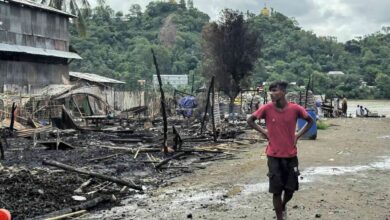
Blockades on crucial supply routes have caused the cost of fuel to skyrocket in Karenni (Kayah) State, a stronghold of anti-junta armed groups, according to local sources.
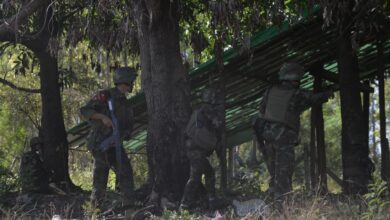
The bulk of fuel transported to Karenni State and the neighbouring township of Pekhon, southern Shan State is shipped via the towns of Taungoo and Yae Ni in Bago Region. Ethnic armed groups and resistance forces have set up blockades on these and other routes used by the Myanmar military to move weapons, supplies, and troops.
A resident of Karenni State told Myanmar Now that merchants who depended on fuel supplies from these routes for their business had temporarily closed shop.
The Kayan New Land Party (KNLP) and its armed wing, the Kayan New Land Army, currently control the area between Taungoo and Pekhon and are responsible for the blockades. The Karenni State resident speculated that the KNLP had made a deal with the military, and were allowing the regime forces to move 300 to 400 troops on these routes without restriction.
A woman fighting for the resistance in Pekhon Township told Myanmar Now how the anti-junta forces were responding to the shortage, which she also attributed to the KNLP blockade.
“We haven’t heard any updates about fuel supplies coming into the region again, so we have to ration what little fuel we have, mainly saving it for our motorcycles. Cars are now only used in emergencies, since running out of fuel would cause serious problems,” she said.

Myanmar Now contacted the Kayan New Land Party, which is based in Pekhon Township, southern Shan State and has reportedly not taken part in armed conflicts over the past four years. They have yet to respond to inquiries about the blockade, sent via the group’s Facebook page.
The Pekhon Township resistance fighter said the fuel shortage was noticeably worse than during Operation 1111 in 2023-24, when Karenni resistance forces launched a coordinated campaign of attacks against military bases in parts of southern Shan and Karenni States, even capturing territory in the Karenni State capital, Loikaw.
The military responded to the offensive by implementing its longstanding ‘four cuts’ strategy, the doctrine of choking off sources of crucial supplies to the military’s opponents by targeting local civilian populations.
At that time, she said, the highest prices seen for petrol were around 8,000 kyat (US $1.82).
Following the KNLP blockade, scarcity has caused fuel prices to rise from between 3,500 and 4,000 kyat (US $0.80 to $0.91) to more than 14,000 (US $3.18) per litre. Some townships in the state reported even higher prices, local sources said.
For comparison, in some Yangon fuelling stations the price for a litre of 92-octane petrol stands at 2,850 kyat (US $0.65).
During the blockade, the Karenni State townships of Bawlakhe, Hpasawng, and Mese have managed to keep sourcing fuel oil from Thailand, according to the Pekhon Township resistance fighter.
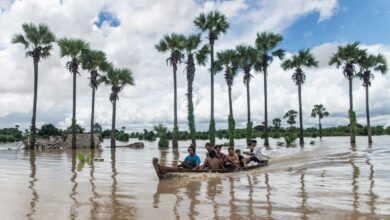
Fuel shortages have disrupted transportation and agricultural activities for local residents.
Secretary Banyar of the Interim Executive Council (IEC), a governing body opposed to military rule in Karenni State, told Myanmar Now that neither the IEC nor any of connected anti-junta armed groups were responsible for the blockades that had caused the current shortage.
“This situation is caused by military and political factors. Fuel cannot be transported freely as people wish. Although there are ways to ease the situation to minimise its impact on people, prices are unlikely to decrease significantly,” he said.
Khu Reedu, the military chief of the anti-junta group Karenni Nationalities Defence Force (KNDF), said in a June 17 social media post that resolving the problem of shortages and overinflated fuel prices in Karenni State would depend chiefly on how the IEC was able to manage the situation.
KNDF deputy commander-in-chief Mawi also claimed in a social media post there would be penalties for people found to be hoarding fuel for the purpose of selling at monopoly prices.