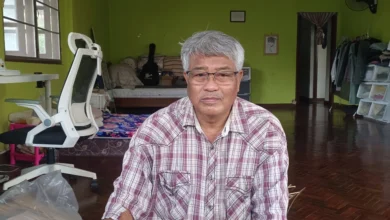
On an early morning in Myanmar’s cool season, a man in his 70s makes his way down a back road, trailed by a loose pack of barking street dogs.
He pauses to pick through a heap of refuse and collect bits of plastic and metal scraps.
The man, along with two grandchildren, spends about four mornings a week in the same way along byways in Mandalay Region’s Patheingyi Township. He collects scraps on the days when he is not hired for day labour.
“I’m afraid to go out too early because of the risk of running into columns of soldiers and the landmines,” says U Aye*, 71, referring to the regime troops that have been advancing into the region’s Madaya Township. “But if I wait too long, I won’t find anything, as others will have taken it already.”
U Aye has occasionally accepted odd jobs as a day labourer, but is unable to take on overly heavy tasks at his advanced age and is normally only able to earn between 6,000 and 7,000 kyat (US $2.90 to $3.30) per day, even less than Myanmar’s minimum daily wage of 10,000 kyat.
He can make between 4,000 and 10,000 per day by collecting scrap material, he says, adding that this is enough to make ends meet because it does not require any . He shared that this work allowed him to make ends meet as it required no upfront cost.
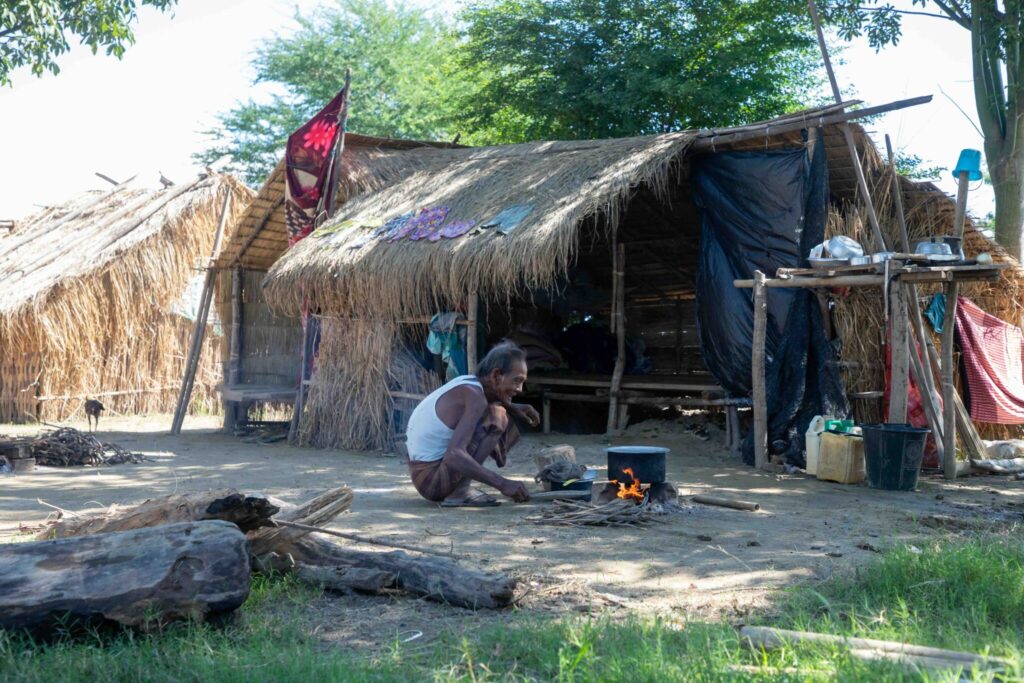
U Aye only recently tried his hand at this work for the first time, seeking any way he could to support his family of 10.
After the coup, as fighting spread through different regions of the country, his village was one of many devastated by violence. U Aye and his family were among the thousands forced to flee their homes, joining millions of other displaced people in Myanmar. He said that the stupefying change in his life felt like something out of a film.
Cement factory brings trouble to villagers and farmers
The Alpha Cement factory, located in Madaya Township some 10 miles north of Mandalay. was causing disruptions to local people’s lives even before the coup.
The conflict between the inhabitants of nearby villages, including U Aye’s village of Aung Tha Pyay, and the Chinese-backed factory ignited when the villagers began protesting the operation of the coal-powered manufacturing facility near their homes and the seizure of their farmlands to build new roads for easier access.
“My farmland was not taken during that time, but I became involved because I was outraged by the injustice done to my fellow villagers,” U Aye said.
The factory managers pressed charges against him after he began protesting, and he was eventually handed a prison sentence of more than six years.
A Burmese saying has it that the happiest days in a man’s life are the day he leaves the monkhood and the day he leaves prison. U Aye said he was overjoyed on April 1, 2023, the day of his release from “the hell” of Mandalay’s Obo Prison.
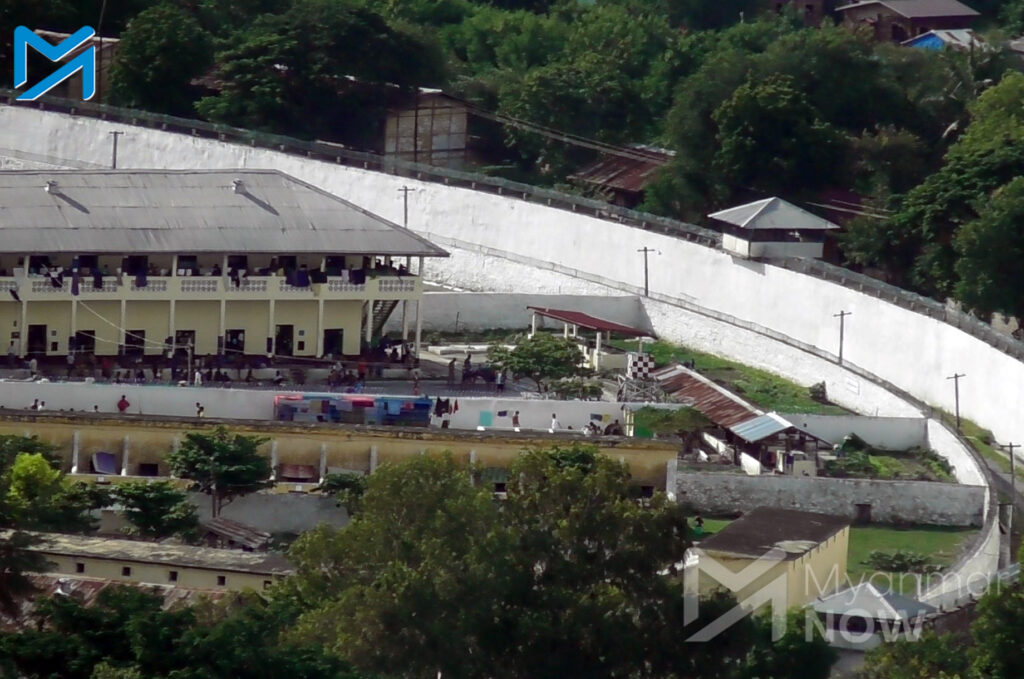
Although his native village was no more than a half hour’s ride from the prison, he said he was so eager to return home that the journey, which required passing through several junta checkpoints, felt like an eternity.
However, seeing soldiers manning these checkpoints was not a shock to him, since he had stayed informed of events on the outside while he was imprisoned.
U Aye recalled that, while he had no major plans or dreams to pursue upon his release, the anticipation of reuniting with his family after so long was enough to put a spring in his step.
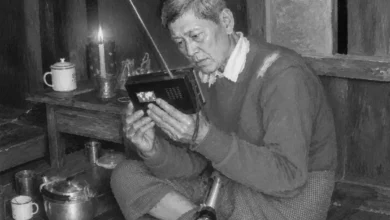
“My life was already in its twilight. My only wish was to live peacefully with my family again and work on my farm like I did before. That was all I wanted. I missed my children and grandchildren dearly,” he said.
He wanted a fresh start, not to get involved in politics or conflict again, U Aye added.
He remembered the gladness he felt seeing the unchanged streets outside his village, mixed with the unease when he noticed one thing that had changed:
The cement factory, which had always had an imposing presence, was now surrounded by armed guards with what he felt was a swaggering, arrogant air about them.
For a time, U Aye was finally able to live contentedly with his family and work his farm, as he had wanted for years, enjoying a modest but comfortable income. However, his peace would not last long.
Fleeing war and persecution
Despite U Aye’s joy at returning home, he soon had cause for anxiety that made it difficult to sleep most nights.
The junta force stationed at the cement factory, made up of around 50 soldiers, were firing on the surrounding villages with heavy artillery soon after U Aye’s return.
One of their shells detonated in Aung Tha Pyay village on May 29, 2024, killing a 65-year-old woman named Tin Hla.
The incident panicked most of the villagers, who hastily fled their homes and sought shelter outside the village.
Three days later, two men in their 20s returned to the village to retrieve some of their abandoned belongings. The security personnel at the factory took them captive, after which there was no word from them and their fellow villagers could not even know whether they were still alive.
While most of the villagers returned home, life in the village was becoming unliveable.
“They once came to my home, calling out my name for an inspection,” U Aye recalled, referring to the junta troops. “They would enter the village at will, capturing and interrogating villagers. We could never live in peace.”
A fierce battle then broke out in the village between the military and the Mandalay Region People’s Defence Forces (MDY-PDF) at the cement factory.
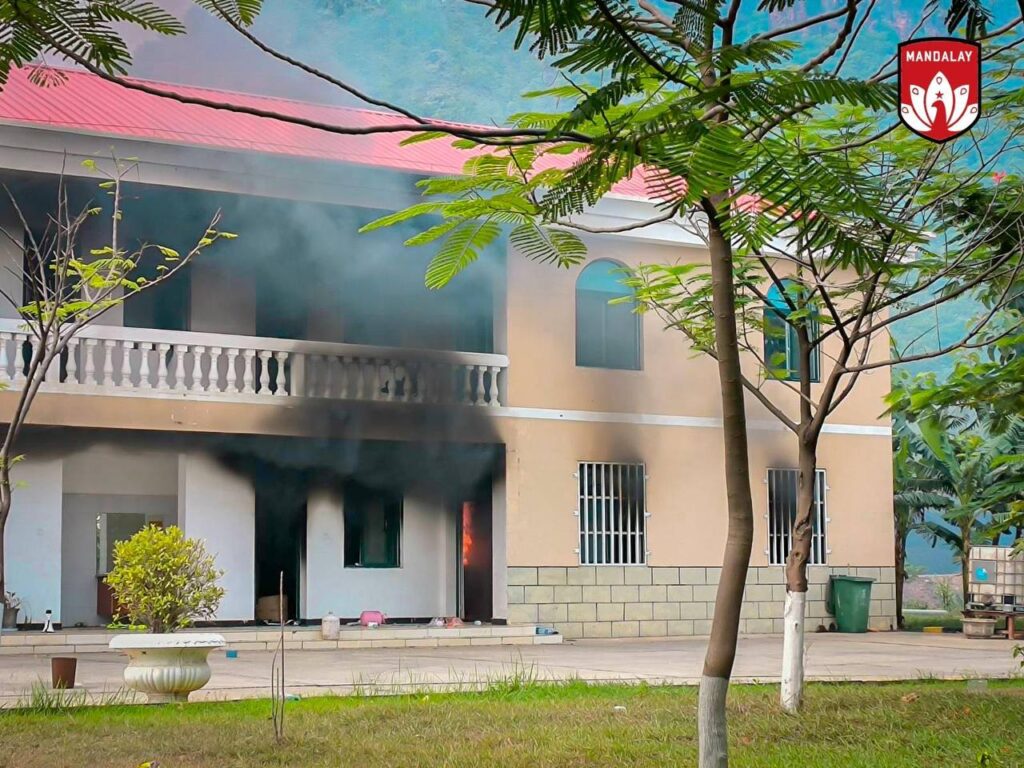
On July 15, the security forces at the factory compound retreated, setting several factory buildings alight as they retreated and leaving them gutted.
Even with the troops gone, however, the airstrikes soon began. They happened every day, U Aye said, sometimes as many as ten times.
After several months as an internally displaced person (IDP), making ends meet was increasingly difficult. Clashes and constant airstrikes forced them to abandon their banana plantations near the village for the rocky hills, and eventually to relocate completely to villages outside Mandalay.
“We’re not safe even now. Shells flew over us in the direction of Madaya, and we saw aircraft bombing the area around Phayaung Taung at the site of the gold mine in Patheingyi Township,” U Aye said as he continued rummaging for scrap material.
“We live in constant anxiety, always wondering when the next shell will land on us, even as we try to sleep at night.”
He said he longed for the day when peace would return and hoped to send his grandchildren back to school as soon as possible, although schools had closed due to the fighting. More than anything, he wished to remain in his village with his family, living in peace.
The toll of civilian casualties rose dramatically in the course of a few months of conflict, according to the Madaya Township People’s Administration Team (PAT), with more than 30 people killed between late October and November alone.
According to the Madaya Township PAT’s figures, between late October and November more than 30 people were reportedly killed in Madaya Township, where intense clashes are ongoing to this day.
A transient life
Ma Nywe*, 45, from Madaya Township’s Mway Talaing village was forced to flee to Mandalay earlier this year with her husband, 6-year-old daughter, and 70-year-old mother.
Her teenage son, who had joined the resistance after witnessing seeing junta troops killing civilians and setting fires in villages, stayed behind with the local defence group intending to contribute to the fight against military rule.
Though she wanted to, Ma Nywe did not try to change her son’s mind. She had to suppress her motherly feelings, she said, knowing that many young people across the country were making sacrifices for the revolution.
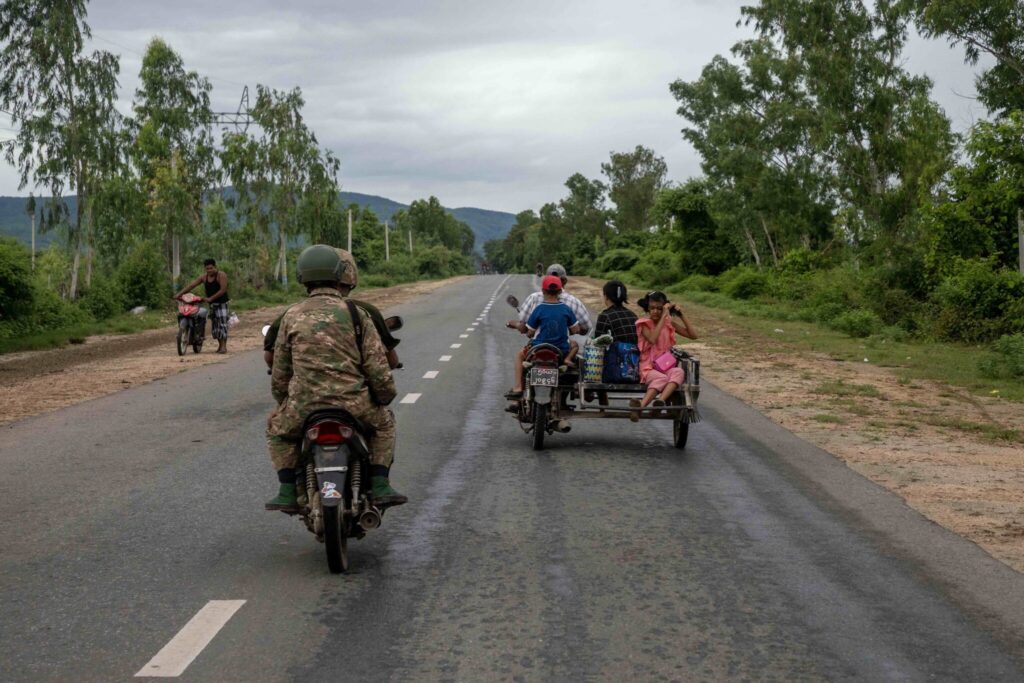
Ma Nywe’s family fled their home by water to avoid the checkpoints that had become common on the Mandalay-Madaya Road, and where other displaced people were frequently victims of extortion or arrest.
They arrived in Mandalay with only a bag of clothes and a small sum in cash.
“We are like animals roaming to find a place with greener grass and cleaner water. I don’t even feel like I can call myself human,” Ma Nywe said. “I left our home for my family, hoping to find a better place to live.”
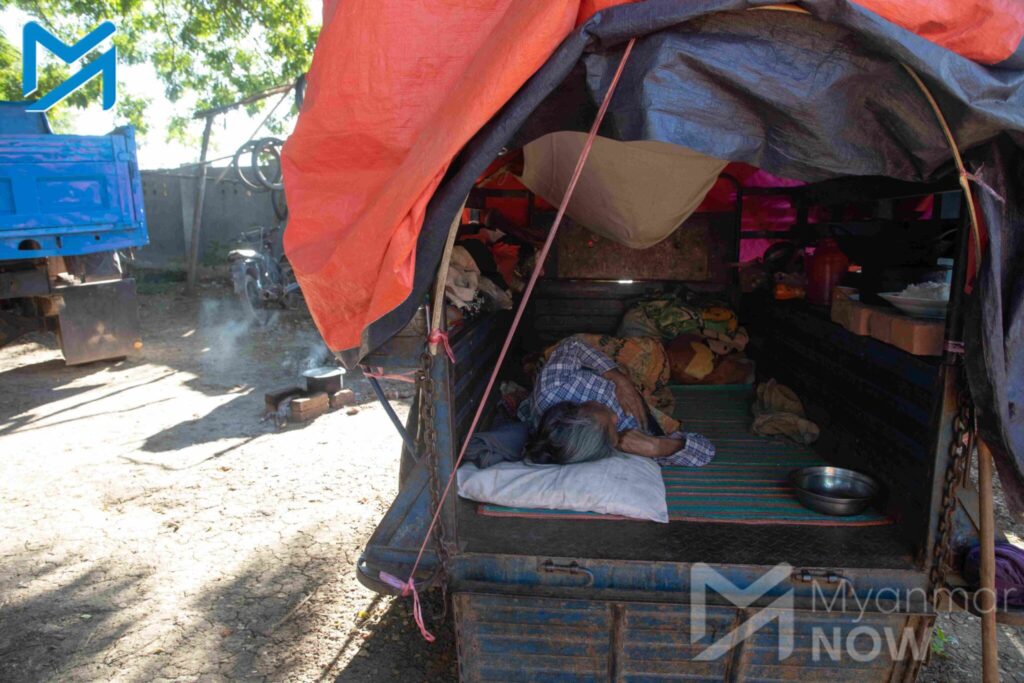
Ma Nywe’s home was among those set on fire during the junta’s raids. When the clashes subsided, she used what money she could raise by selling her jewellery to rebuild it but still had to use some of her cash savings.
However, fate was unkind to Ma Nywe’s family. Only a few months after they rebuilt a home out of bamboo walls and a thatched roof the junta troops torched it again. That was what finally forced them to flee to Mandalay.
“We stayed with relatives when we first arrived in Mandalay. But as time went on, we started to feel we were imposing on them, even though they were our relatives,” Ma Nywe said.
“Now, we make a living as vendors and live in a small apartment near our relatives’ home, where we pay monthly rent.”
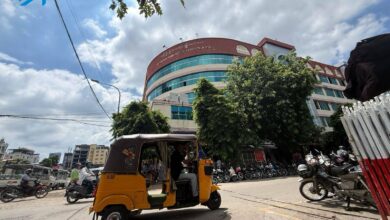
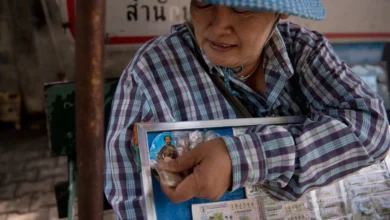
Ma Nywe and her husband sell fruit at a wet market in Mandalay’s Chanayethazan Township in the mornings and fried noodles and vermicelli at a school market in the afternoons. While they were tired from working nonstop through the day, she said it felt manageable because at least they no longer had to fear for their lives.
The expenses they had to manage included the monthly rent for their home, food costs, medical costs for the elderly mother, tuition fees for their 6-year-old, and occasional support for their son and relatives still in their home village.
Ma Nywe said she hoped peace would come quickly so they could return to their home village.
Displaced families from central and upper Myanmar like Ma Nywe’s have flooded into large cities like Mandalay because of the ongoing war. There, they have faced the fresh problems of soaring food prices, steep rent, taxes, junta-run “guest registration” inspections amount to disguised extortion, and the ever-present threat from armed junta troops.
There are around ten IDP camps—each with thousands of inhabitants—in Madaya and Pyin Oo Lwin townships, which reportedly receive some support from People’s Defence Teams and People’s Administration Teams operating under the publicly mandated National Unity Government.
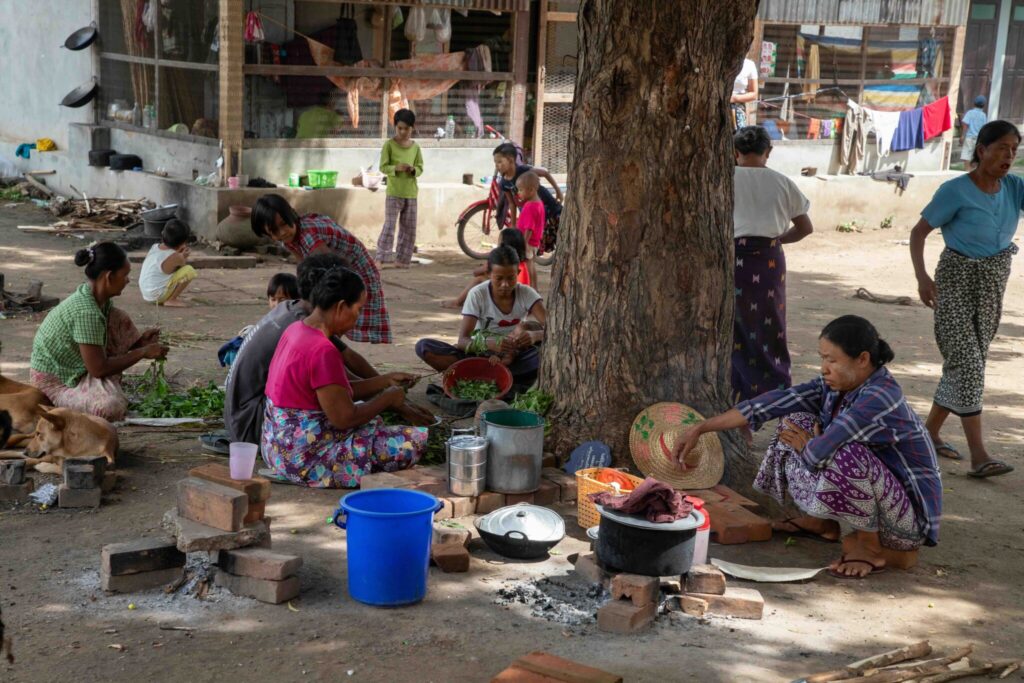
An official from the Pyin Oo Lwin District People’s Defence Team told Myanmar Now that there are an estimated 10,000 internally displaced people currently in Madaya Township.
“Most found shelter in nearby IDP camps and liberated areas to avoid the clashes,” the official said. “They are struggling with numerous hardships, having been forced to flee and find refuge in a hurry.”
With rations running low and donations scarce, IDPs had begun to look for jobs, according to the official, who said “Some collect plastic for recycling, others make and sell snacks if they have the skills, while some work on farms to make a living.”
However, news that the junta air force had begun targeting IDP camps in some parts of the country were causing anxiety among the people seeking safety in these temporary settlements.
Supporting IDPs in crisis
A journalist forced to give up his profession amid the growing risk of arrest after the coup later began working with an organisation that providing meals and shelter to IDPs in Sagaing Township in the region of the same name.
“Feeding over 2,000 people for months is no easy task. Initially, we were able to provide rice and oil, but now we can’t afford to continue this on a monthly basis. We need to keeping looking for new donors to supply cooked meals,” he said.
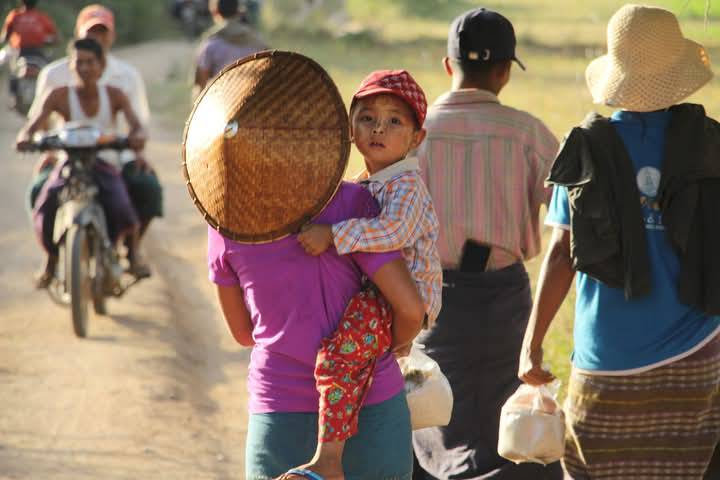
When rations began to dwindle, they contacted local farms for donations. Each farm contributed the two to three baskets of vegetables that they could spare, enough to fill a truck.
The ex-journalist has also seen IDPs taking odd jobs on the farms.
“They harvest peanuts and sesame, working as hired hands on local farms,” he said. “In return, they receive accommodation and meals and the money they earn helps them cover some extra expenses.”
The residents of some 30 villages on the Ayeyarwady River in Madaya Township have also sought shelter from conflict on the large alluvial islands in the river.
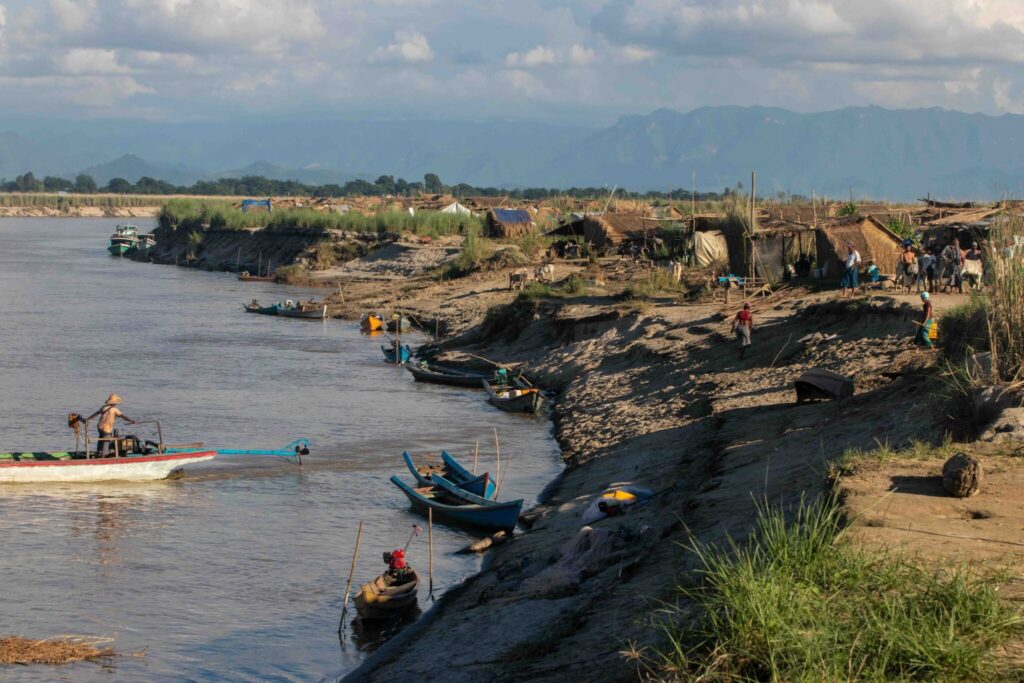
Growing from a handful of families to crowds in the hundreds, people have gathered on the islands to get away from battles and military bases. They sustain themselves by fishing and making thatched roofs.
While the will to support themselves perseveres among the people victimised and displaced by the military, few people are left to help them who have not already suffered their own hardships.
78 villages have burned down in Sagaing Township, and the victims who lost their homes in these fires are now helping to support displaced people.
“The displaced people from Madaya have arrived in Sagaing Township, where they are living in villages already devastated by fire,” the ex-journalist said.
“It’s a double burden.”
*The names of our source have been changed in this story out of consideration for their security.