Myanmar’s military junta has regained control of some strategic border trade routes following a series of offensives, but resistance groups continue to hold more than half of the country’s official border trade gates, limiting the regime’s ability to revive cross-border commerce.
The military has sought to re-establish control over key trade corridors since ethnic armed organisations and resistance forces aligned with the National Unity Government (NUG) seized large swaths of territory during Operation 1027, launched in late 2023.
According to figures released by the junta-controlled Ministry of Commerce, Myanmar’s border trade totalled more than US$10 billion during the 2020-21 fiscal year but fell to $7.7 billion in 2023-24. The ministry has not published updated trade data since June 2024.
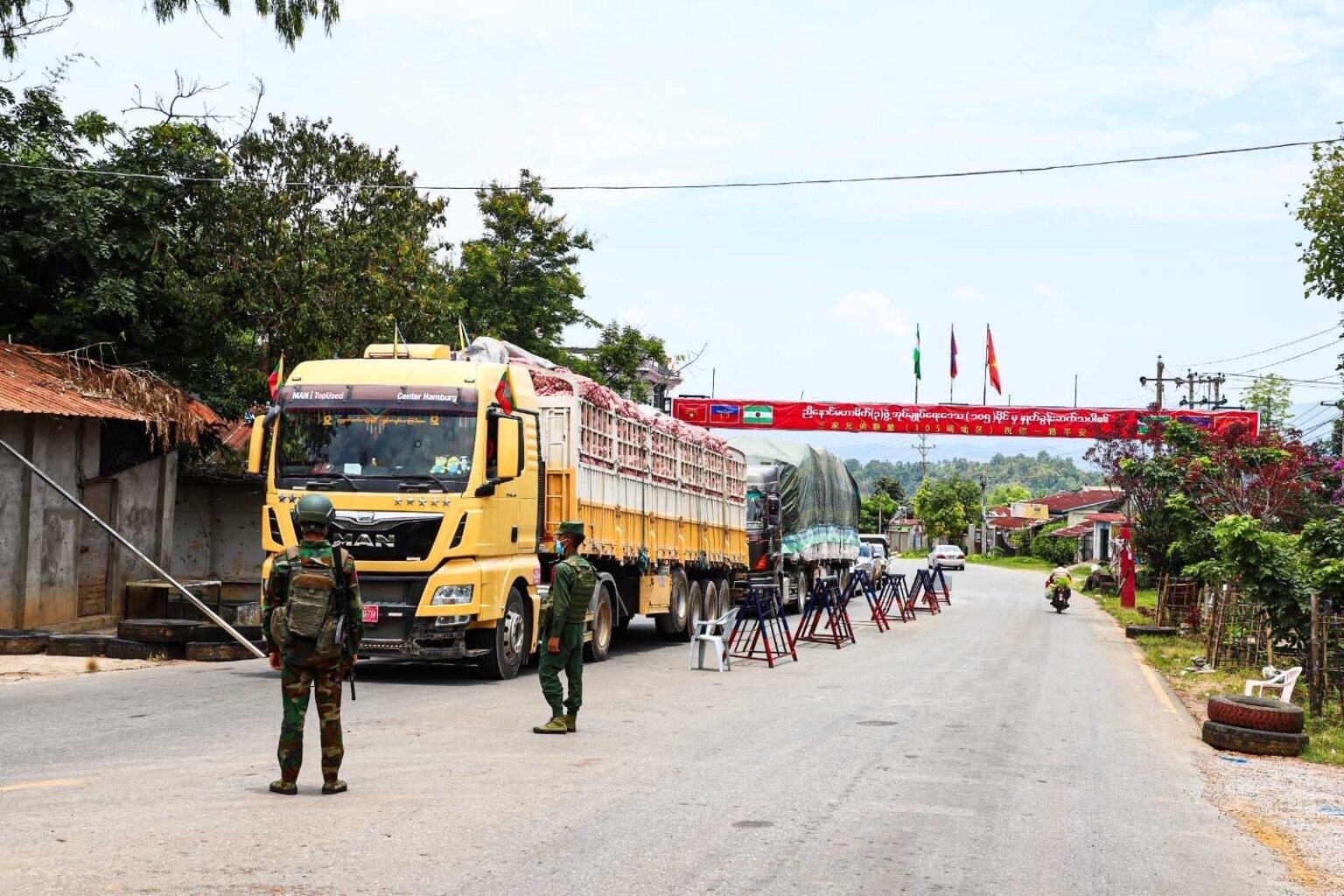
One of the junta’s most significant recent gains came along the Asian Highway linking central Myanmar to the Thai border town of Myawaddy in Karen State. The route, which carries billions of dollars in annual trade, reopened to commercial traffic at the end of May after regime forces regained control of key sections.
Despite the reopening, traders say commerce remains well below pre-conflict levels due to ongoing inspections, seizures of unlicensed goods and concerns over security.
The military is also conducting a major offensive aimed at securing the Tamu border crossing with India and the Kalay-Tamu road, part of the India-Myanmar-Thailand Trilateral Highway. Ultimately, it hopes to restore access to the full length of the 210-mile highway linking Tamu to the Sagaing Region capital Monywa.
Despite its efforts to retake control of the country’s main trade arteries, however, resistance groups continue to control 10 of Myanmar’s 18 official border trade posts.
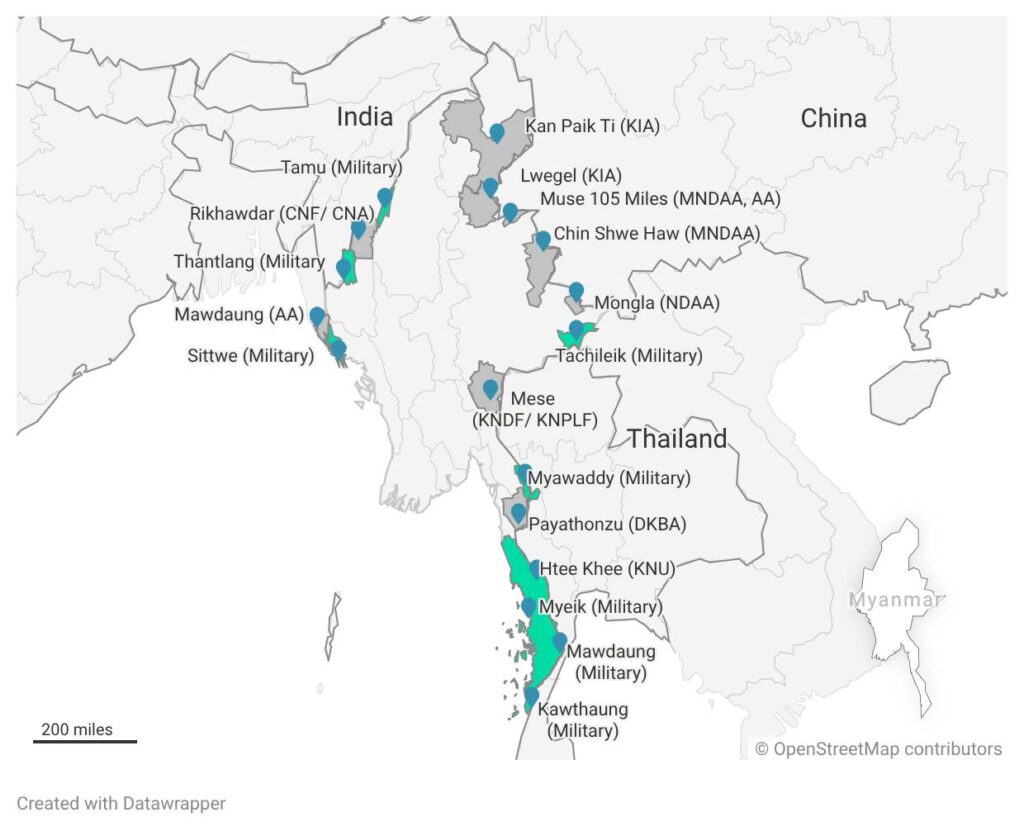
Along the border with China, the junta administers the town of Muse in northern Shan State, but the Myanmar National Democratic Alliance Army (MNDAA) controls the Muse 105-Mile Trade Zone and the Chin Shwe Haw crossing, while the Mongla border gate is under the control of its ally, the National Democratic Alliance Army. Further north, in Kachin State, the Kachin Independence Army holds the crossings at Lwegel and Kan Paik Ti.
The military controls five of eight official trade posts along Myanmar’s nearly 1,500-mile border with Thailand, including Myawaddy, Tachileik, and Kawthaung. The others are held by the Karen National Union and the Democratic Karen Benevolent Army, with one each in Karen State, while the Karenni Nationalities Defence Force and the Karenni National People’s Liberation Front jointly control the Mese crossing in Karenni State.
Along the Indian border, the military controls not only Tamu but also Thantlang in Chin State, while Rikhawdar, also in Chin State, is held by the Chin National Front/Chin National Army. On the Bangladesh frontier, the Arakan Army controls the Maungdaw border post, while the junta maintains control of the crossing in the Rakhine State capital, Sittwe.
Traders interviewed by Myanmar Now said the country’s border trade has yet to recover because of incomplete military control over border crossings and restrictions imposed by the junta on imports.
Although fighting has subsided around Myawaddy since trade resumed, a local trader said businesses remain wary that resistance forces could launch new offensives.
“Before, we constantly heard reports that the highway had been attacked or drone bombs had been dropped,” the trader said, speaking on condition of anonymity. “But we haven’t heard that recently, so the military appears to be gaining control.”
Import restrictions imposed by the junta are still a greater obstacle to trade than security, he added.
Earlier this month, the military announced it had resumed issuing export licenses for agricultural products including maize, avocados, betel nuts, turmeric and onions, while approving import licenses worth 620 million Thai baht (US$18.6 million) for food, consumer goods, and industrial raw materials.
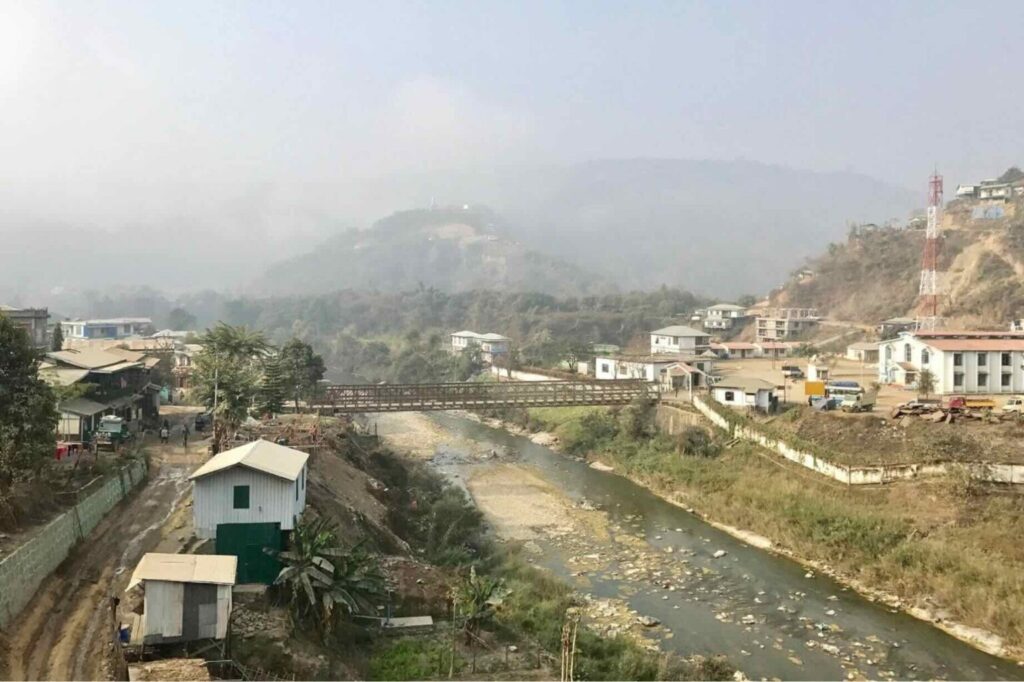
Conditions remain similarly uncertain along the Indian border.
Following junta chief Min Aung Hlaing’s visit to India from May 30 to June 3, military authorities stepped up operations along the Kalay-Tamu road. On June 19, state media reported that Khampat—captured by NUG-aligned forces in November 2023—had been recaptured and that traffic along the India-Myanmar trade corridor would soon be restored.
However, a transport operator based near the Indian border disputed claims that the corridor is secure, saying resistance forces continue to control sections of the highway.
“They may control certain areas, but People’s Defence Forces are still active nearby,” he said. “Drivers are still afraid to travel because fighting could break out at any time.”
He also said traders remain concerned about the military’s seizures of imported goods under anti-smuggling measures.
But it is along the Chinese border that the junta has lost the most influence over cross-border commerce, according to traders.
A cargo transporter from Namkham in northern Shan State said trade continues under the authority of ethnic armed organisations despite the military’s inability to issue licenses through those crossings.
“Trade between these groups and China is taking place every day,” he said.
Wa News Land, a local media outlet, reported on June 17 that the MNDAA is expanding the Chin Shwe Haw border crossing and plans to open a new gate.
The Namkham trader said the MNDAA now dominates much of northern Shan State’s border trade, although major commercial opportunities have largely gone to wealthy Chinese investors.
During a visit to China this month, Min Aung Hlaing told Phoenix News that only only his regime has the authority to manage border security and cross-border trade.
“Border area management, border trade and bilateral cross-border trade must be conducted only by the government,” he said.
Myanmar Now sought comment from Deputy Commerce Minister Min Min regarding the status of border trade and territorial control, but he could not be reached.