- Business

Grape growers feed an expanding wine market in Myanmar
YAMETHIN, Mandalay Region — Workers prised grapes from rows trained on Y-shaped trellises, loading them into their baskets, while vehicles weighted with lugs of fresh grapes left the vineyard one by one. Myanmar Now came across this busy scene while visiting Yamethin Township of Mandalay Region, in Myanmar’s central Dry Zone, in May. Two types of grape are nurtured in the sprawling vineyards of the township. One is sold fresh to fruit wholesalers, the other is sent for pressing in wineries. Grower U San Aung in Alaykon Village said the advantages of growing grapes for wine included the money saved on transport, because the wine companies come right to the vineyard to buy grapes. “It is not difficult to grow more wine grapes if the first batch goes well. If all goes well, I won’t need to grow other crops,” he said. Like San Aung, local growers are increasingly selling to wine companies to meet a steadily growing demand. Partnerships Myanmar’s drinkers currently prefer beer or spirits, but wine producers are hopeful that wine enjoyment will keep growing steadily from its low base. Supermarkets in larger cities are stocking an increasing number of locally made wines. Tourists may also be…
- Business

Change afoot in southern Shan State’s premier tea town
PINLAUNG, Shan State — Visitors to Pinlaung, a hilly town perched 1,500 metres above sea level in the Pa-O Self-Administered Zone of southern Shan State, are greeted with the scent of tealeaves. The town, with its mixed ethnic Pa-O and Shan population, and its surroundings account for the largest area of tea cultivation in southern Shan State, and its shops are full of dried or pickled leaves. Sai Pon, who claims to have grown tea locally for close to 50 years, said recent tweaks in production methods have allowed for higher incomes with less work. “In the old days, the whole family had to contribute. New methods have saved time and improved the quality of tealeaves,” said Sai Pon, who lives in Koe Khaung ward. Koe Khaung was once a village before it joined the municipality. There is nationwide demand for its excellent tea, known as “Pinlaung-Koekhaung.” Sai Pon and other local growers said a more “systematic” approach, from harvesting to packaging, and closer attention to cleanliness, had upped quality further. According to Pinlaung Township’s agriculture department, tea plantations cover 12,000 acres. Around half of it is clustered around a higher-elevation village called Le Hlaung, 10 miles from Pinlaung town.…
- In-Depth
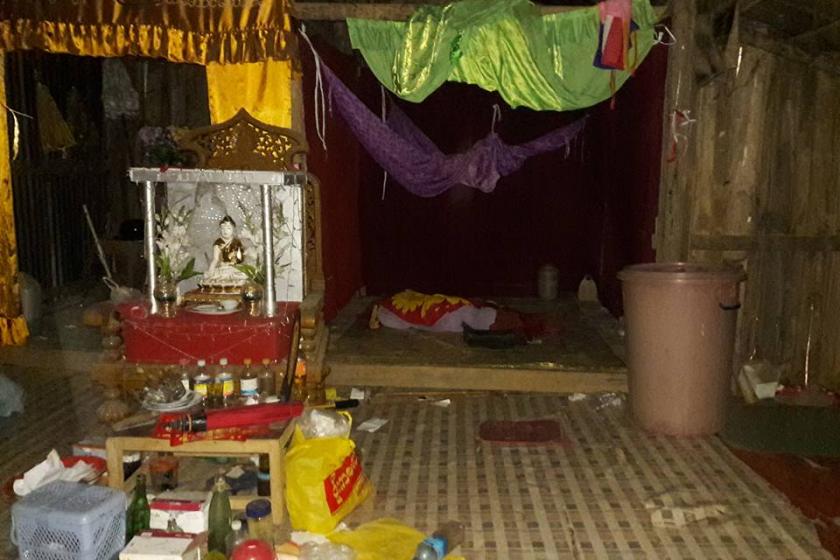
Girls raped for months in Ayeyarwady monastery
A village monk repeatedly raped four girls under his care, and is now on the run. Parents say the monk took advantage of their poverty.