In-Depth
When the people are the enemy: Why Myanmar’s resistance is not giving up
After more than five years of fighting, the will to defeat a regime that routinely targets civilians is as strong as ever
A narrow boat fights against the flooded waters of the Moei River, which separates Thailand and Myanmar. The driver battles the fast-flowing, coffee-coloured waters until he expertly catches a current that sweeps his boat to a landing spot on the Myanmar side.
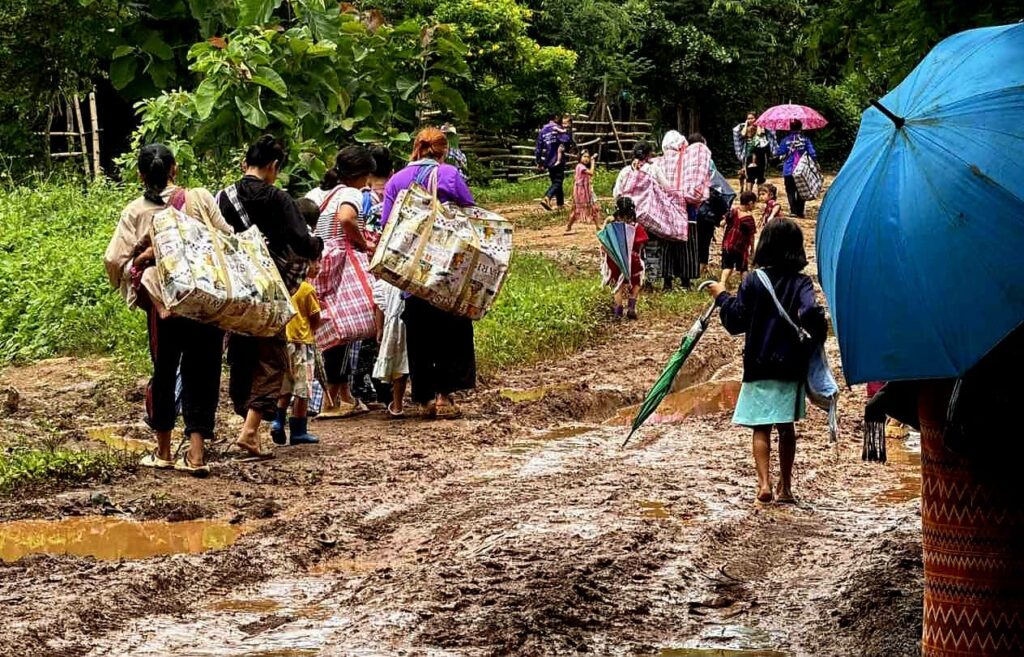
The sound of distant explosions forms a constant backdrop to the river sounds. Heavy monsoon rain beats down—plastic ponchos and dense jungle foliage offer little protection against the deluge, which turns the sloping riverbank into mud. Despite the slippery conditions, a human chain forms to pass bundles of tarpaulin, plastic-wrapped boxes, and bags of clothing from the boat to a waiting pickup truck. The boxed supplies contain medicine, baby formula, cloth nappies, mosquito nets, and floor mats designated for a nearby displaced people’s camp, Plaw Ta Poh.
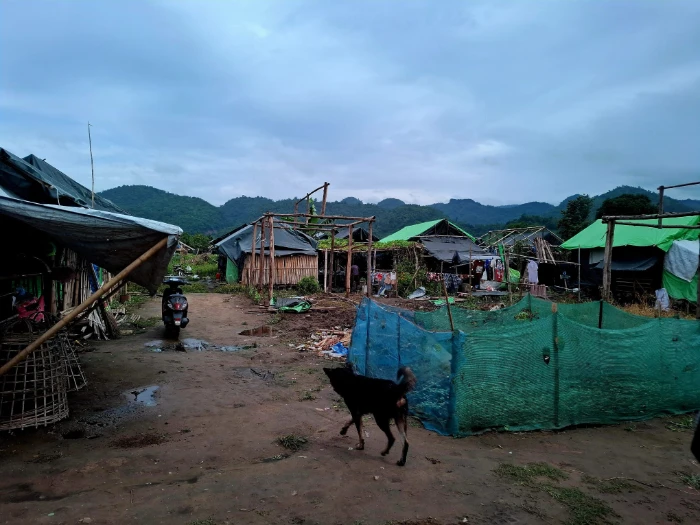
The camp sits exposed on flat ground at the edge of the river. It is home to 2,049 residents who were recently driven from their villages by junta airstrikes, drones, and ground artillery.
The heavy rainstorm batters the rows of tarpaulin-roofed huts and drowns out the sound of children chanting lessons back to their teacher. The Moei River—its waters swollen with rain and stained with topsoil washed off the mountains—flows past dangerously fast.
The rows of camp huts currently being built are basic. Tarpaulin is wrapped around six rough, hand-cut timber poles that make up the three-metre living quarters. Three horizontal poles link and add strength to the six uprights. To stop the heavy monsoon downpours from pooling and collapsing the roof, a small peak is constructed to slope the tarpaulin on both sides. Each small hut will house a family of at least six people.
Naw Phaw Lwei, a former midwife and the current camp leader, says the camp’s residents are grateful for the housing and support they receive, but they live in constant fear.
“All the people here were bombed out of their villages and came with nothing but what they could carry.”
Naw Phaw Lwei looks at the torrent of rainwater cascading off the sides of the huts. She worries that the wet season will bring malaria, dengue fever, gastric illnesses, diarrhoea, pneumonia, bronchitis, and other respiratory diseases.
“We need mosquito nets and repellent, medicine, blankets, and materials to build more huts. We have more than 250 schoolchildren. We scatter the classrooms across different locations in the camp to keep the children safe. We know the junta targets schools and clinics with their drones.”
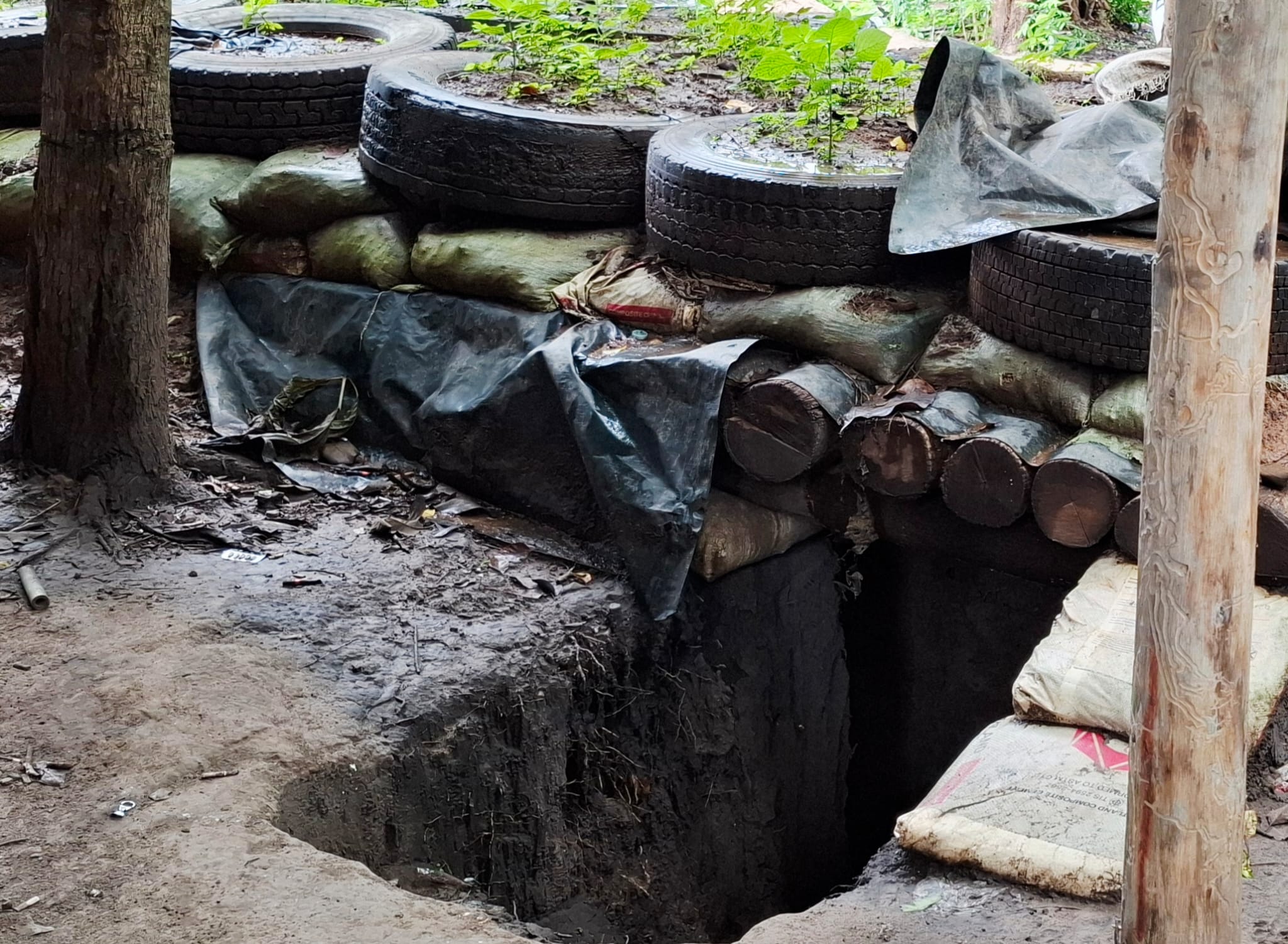
To support her claim, Naw Phaw Lwei points to a blackened, empty plot amidst the rows of huts. She explains it is the result of a kamikaze drone that narrowly missed the camp’s clinic but destroyed several nearby houses, killing one man and wounding two others.
“People here live with insecurity every day. They can’t sleep peacefully, and when they are awake, they feel anxious and frightened—they can’t relax. Children cry when they hear planes and explosions.”
Distant explosions lend weight to her words.
“We can clearly hear and see mortar blasts, and when the planes drop the big bombs, we can feel the vibration in the camp—the whole ground shakes. At night we can’t see anything, only the flashes from the explosions. If we run, we can slip and fall. For the elderly and pregnant women, it’s a nightmare.”
Naw Phaw Lwei responds with anger and frustration to the approaching explosions.
“Drone attacks happen every day. They are now bombing villages around Min Let Pan, Wale, Palu, and Lay Kay Kaw. Most of the people here are from those areas. Whole villages were destroyed with firebombs that burned everything. If you want witnesses, we have many: 892 from Min Let Pan and at least another 500 from Palu. All have experienced drone attacks, firebombs, and constant shelling.”
Credible international reports confirm Naw Phaw Lwei’s assertion that the junta’s airstrikes target civilian populations.
Analysis by the monitor group ACLED (Armed Conflict Location & Event Data) found that from February 1, 2021, when the military seized power, until January 23 of this year, the impact on civilians has been deadly, with more than “6,300 military air and drone strikes that resulted in at least 4,700 fatalities.”
The junta’s aerial attacks and ground artillery bombardments of Myanmar’s civilian population and infrastructure are now a daily reality, resulting in mass nationwide displacement. The United Nations refugee agency UNHCR estimates that as of July 6, a staggering 3,814,100 people have been displaced since the coup.
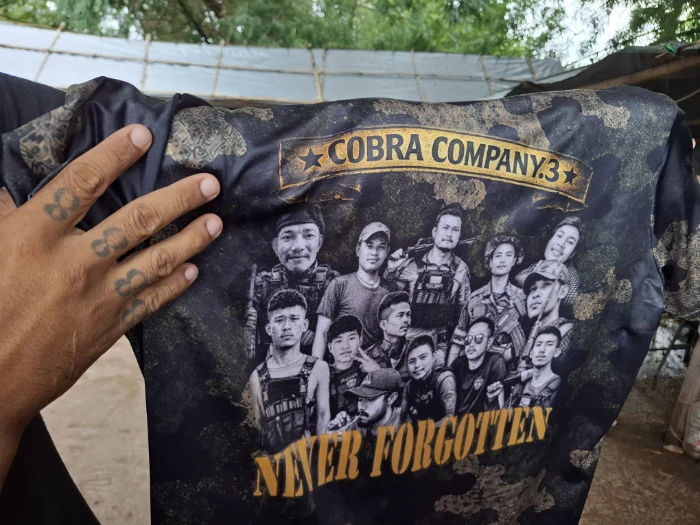
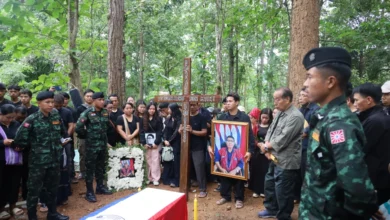
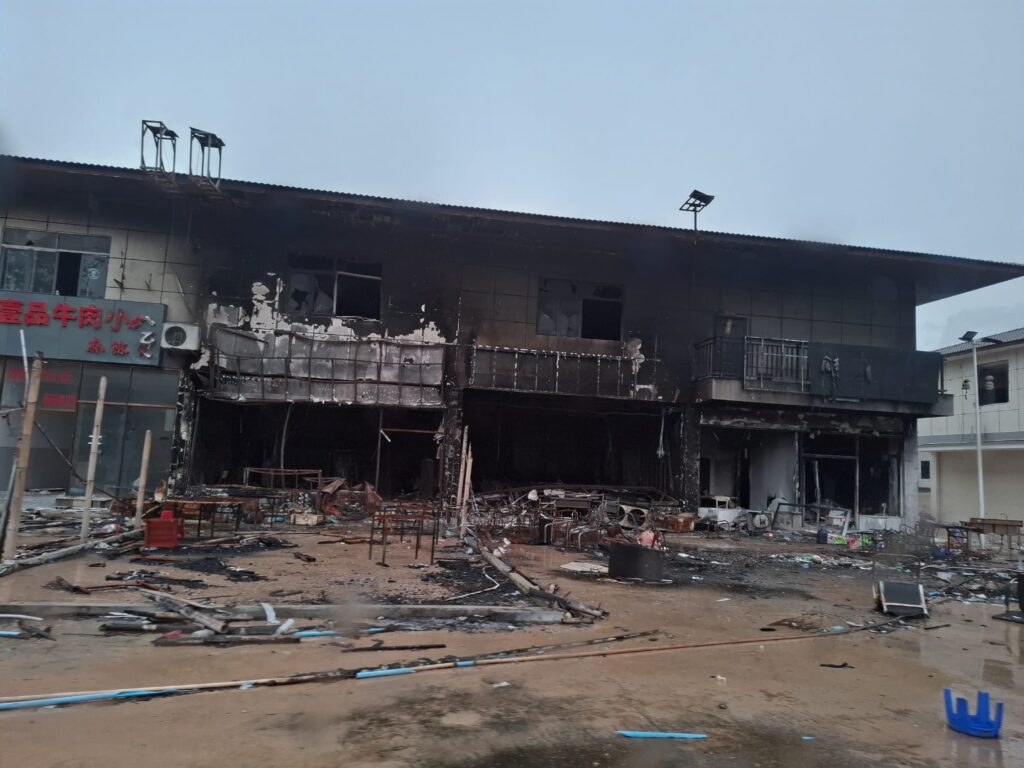
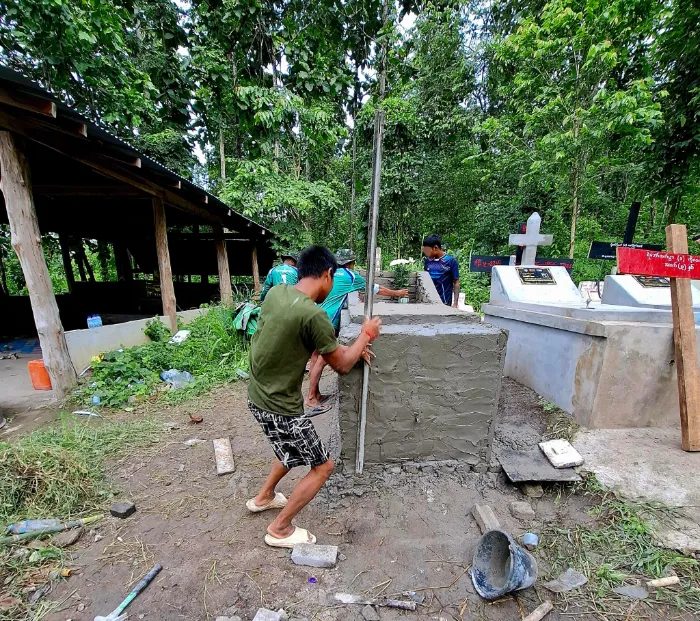
Driving away from Plaw Ta Poh, there are grim reminders of the toll the war has taken: deserted buildings burnt black, plastic shopfront signage melted beyond recognition, and exterior walls with shell holes large enough to walk through. A small jungle graveyard pays homage to fallen resistance fighters. Glossy photographs of the fallen, not yet faded by the extreme jungle weather, are mounted on concrete graves above the ground.
Amidst the destruction left by airstrikes on villages are stark reminders of the protection given by the junta and allied militias—the Democratic Karen Benevolent Army (DKBA) and the Karen Border Guard Force (BGF)—to international organised crime syndicates operating scam centres in areas under their control.
Since the coup, Myanmar has emerged as a safe haven for gangs running some of the world’s largest online fraud operations.
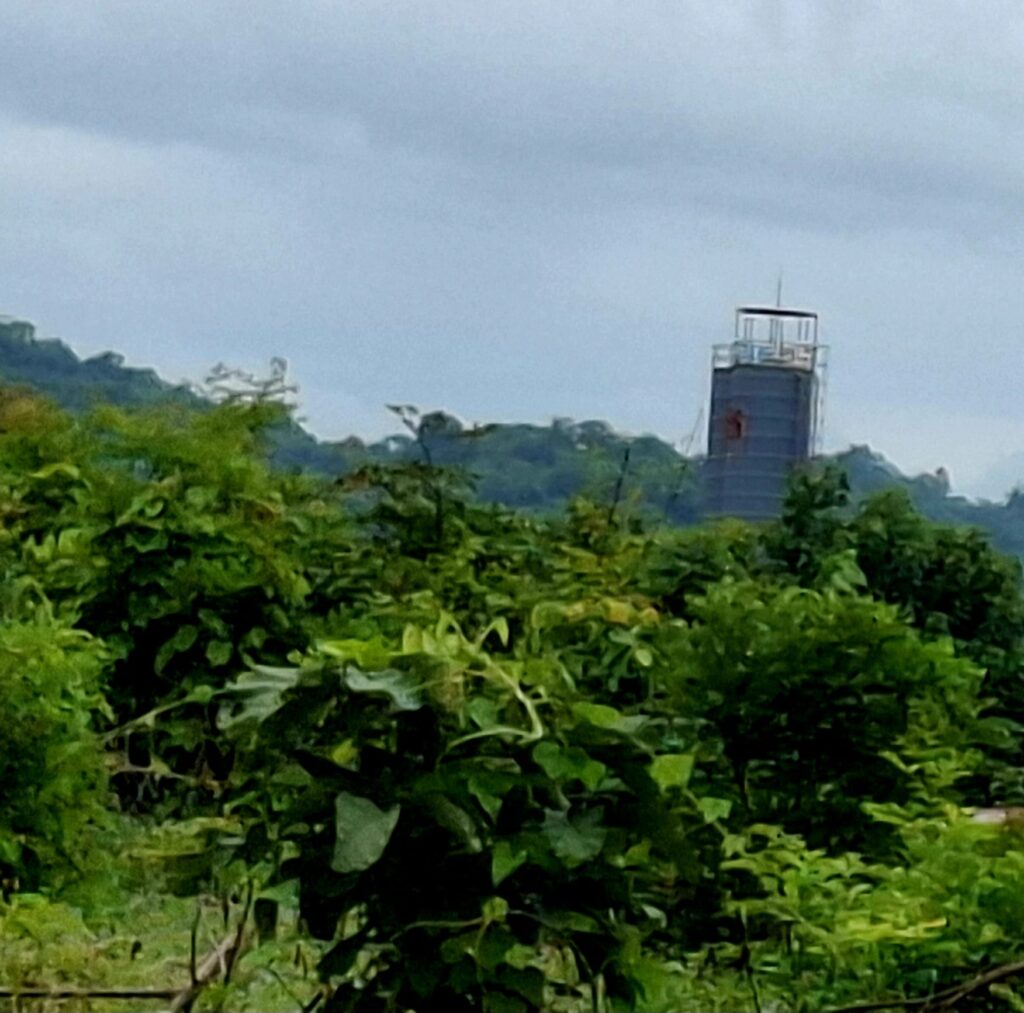
Despite the junta’s recent attempts to convince China, the US, and Thailand that it is not involved in these activities and is fully committed to eliminating them, the evidence suggests otherwise. Highly visible infrastructure—concrete factory silos sticking out above the jungle canopy, hillsides scarred by quarries providing gravel for roads, and convoys of concrete trucks travelling to and from the silos to ever-expanding scam centre construction sites—continue to appear inside territory controlled by groups with close ties to the regime. To provide security and secrecy, solid three-metre-high fences—some topped with razor wire—run for hundreds of metres.
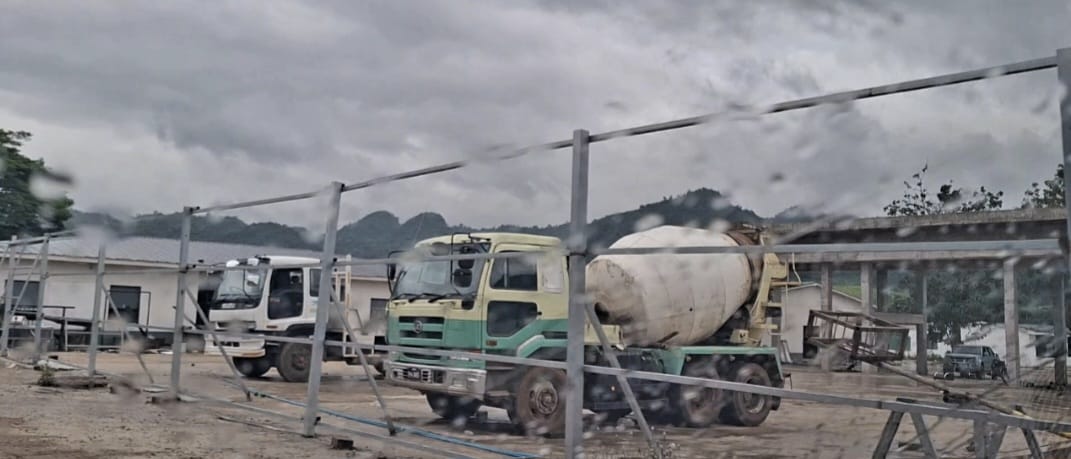
A camp resident points out that while the junta’s air force is capable of destroying villages, schools, and clinics, its high-tech drones, planes, and jets are somehow unable to locate the tall concrete silos or the endless supply of cement trucks running back and forth to the visible scam centre compounds.
The displaced resident makes a valid point, adding: “Why not get rid of the scammers and house us in their living quarters? There’s enough housing there for all of us here.”
Most of Myanmar’s internally displaced persons (IDPs) have no safe place to flee to; instead, they must take shelter wherever they can find it—a harsh reality noted by the UN’s Office for the Coordination of Humanitarian Affairs: “Only 15 percent of IDPs are in formal camps, while many endure harsh conditions living in informal shelters or jungles with severe shortages of food, healthcare, and water.”
‘It breaks my heart’
Naw Mu Dah is one of the country’s millions of displaced villagers living in a makeshift shelter after being driven out by junta airstrikes.
The shelters are scattered and rudimentary: small wooden or bamboo platforms built off the ground, torn plastic mats spread under trees or in cornfields, and roofs made of dried leaves or plastic sheeting. Clothes are washed in muddy river water and worn while still wet. Hungry or sick children pester tired mothers for breast milk, food, or pain relief.
Clusters of displaced villagers like Naw Mu Dah cling to the Thai-Myanmar border, taking cover in temporary shelters in the hope that if they have to cross the river into Thailand, they will be safe from the bombing.
Without a boat, the monsoon season makes finding a safe crossing spot nearly impossible. Powerful floodwaters lash both sides of the river, uprooting small trees and washing away any hope of crossing safely.
Naw Mu Dah’s face reflects the strain of losing her home and caring for her three young children while moving from shelter to shelter to avoid constant airstrikes. She takes a moment to describe what happened when her village, Htee Thar Lei, was bombed:
“The roof on our little house was blown off, and the rest of the building collapsed into ruins. It happened when a fighter jet first attacked the Htee Teh Ler school; our home was destroyed in the blast. The school, the boarding house, and the church were destroyed. Those weren’t the only buildings—they dropped incendiary bombs, and over 30 houses burned down. When they came back again, they dropped 30 more bombs, and our village was completely destroyed.”
Naw Mu Dah, like most of the villagers interviewed, is well aware that their villages are intentionally targeted by the junta.
“This is not the first time the Sit-tat [the junta’s army] has bombed us. They know it’s our rice planting time. If we can’t plant and look after our crops… next year we won’t have anything to harvest or store.”
Naw Mu Dah is deeply troubled by the effect the airstrikes have had on her three young children.
“My youngest son is terrified. If he hears a plane, he screams and hides, and when he hears the bombs, he becomes petrified with fear. The planes come every day—they came yesterday, they’ll come today, they’ll come tomorrow. No one can live in our village anymore. We just move from place to place.”
Naw Mu Dah wrings her hands as she recalls what happened when junta forces entered her village.
“After the planes, the soldiers come. It’s not just my family—the entire village is terrified. Karen people are proud and overjoyed when we build a house; it’s a time of celebration for us. To see our homes destroyed makes us deeply sad. But what we fear most is that the soldiers will set fire to everything, including our rice stores, and kill our animals, leaving us with nothing.”
Thousands of displaced Karen villagers like Naw Mu Dah rely on help from people like Naw Na Na, head of the Myawaddy District Karen Department of Health and Welfare, established by the Karen National Union. Her job is complicated by the fact that her area of responsibility covers territory controlled by junta-sponsored militias as well as resistance forces. Naw Na Na’s team of health workers navigates the complexities of working in an active conflict zone while managing 12 clinics and delivering healthcare to 59 villages with a total population of 185,605 people.
Naw Na Na has been a health worker for 45 of her 63 years. Over the decades, she has witnessed the displacement of thousands of villagers forced from their homes by successive military regimes. But the situation has never been as bad as it is now, she says.
“The current displacement is the worst I’ve seen. It’s destructive on so many levels. This junta spares no one. When they bomb a village, it’s schoolchildren and teachers who are killed and wounded. If they hit a residential area, civilians are the targets. If they bomb a hospital, it’s the patients and health workers; if it’s a church, it’s the congregation.”
Under the cover of a large, open-sided storage shed, Naw Na Na and her team deliver aid donated by a local Thai organisation to roughly 100 mothers with young children. The mothers gather around, waiting to fill large rice sacks with cloth nappies, powdered milk, feeding bottles, cartons of soy milk, baby soap, washing powder, hand sanitizer, and boxes of rice noodles. These young mothers and their babies live in makeshift camps or shelter beneath the homes of supportive locals.
“It breaks my heart to see young mothers, the elderly, and children running to avoid the junta’s drones. Think of all the homes, schools, and clinics destroyed by the junta since the coup. Farmers can’t plant or harvest their crops, education has been disrupted, and homes, possessions, and memories have all been smashed—for what?”
Naw Na Na pauses what she is doing, takes a deep breath, and confirms claims that civilians are being systematically targeted by the junta’s air force and artillery.
“These people the junta are killing and injuring are not soldiers—they’re mothers, babies, grandmothers, schoolchildren, and medics. Nearly every village around here has been hit, including Htee Teh Ler. Planes and drones come three or four times a day… around July 10th, they dropped about 30 to 50 bombs—huge bombs, over 500 kg. Houses have been completely destroyed. Villages and homes built over years are all gone, burnt to the ground.”
Naw Na Na muses on the absurdity that while civilian villages are routinely targeted, illegal cyber scam centres located in areas controlled by groups like the DKBA and the Karen BGF never suffer any damage from the regime’s airstrikes.
A sudden downpour turns the surrounding roads to mud, forcing people to seek shelter. Naw Na Na explains that the wet season will bring additional hardships for the displaced.
“From a health perspective, there are mosquito-borne diseases like malaria and dengue. A lack of clean drinking water will cause gastric problems, and because many live in small, leaky huts or under people’s houses, we expect more cases of asthma and respiratory infections. Exposed to the weather without clean water, mosquito nets, or blankets, it will be incredibly difficult for them not to fall sick—especially the young and the elderly.”
She emphasises with anger that the mass displacement is not the result of a natural disaster.
“It’s not nature causing this. It’s planes, drones, and artillery ordered to destroy villages and kill civilians. It’s not just happening in this one place—it’s happening across the entire country.”
Battles are now fought day and night along the 55km stretch of territory between Min Let Pan and Wale. Resistance forces are battling the junta’s army and its sponsored militias. Surveillance by the junta’s scout drones is a constant threat as they search for targets. Naw Na Na fears the expected air and drone strikes will cause further civilian casualties and put massive strain on IDP and frontline clinics.
The frontline clinic
Dr. Drit and his team of 20 medics operate the frontline clinic for the Cobra Column, a special operations unit of the Karen National Liberation Army, treating a constant stream of patients—most suffering from drone and airstrike injuries.
“Most of our patients are from our revolutionary forces. But if the IDP camp clinics don’t have the means or resources in an emergency, wounded villagers come to us for treatment. So far this year, we’ve treated 32 civilian casualties. Two died, and the other 30 were seriously wounded by drones.”
Dr. Drit and his team set up the frontline clinic in early 2022. To keep staff and patients safe, the clinic’s location is mobile; it moves whenever necessary to support the shifting frontline and avoid being targeted by the junta’s drones, planes, and artillery.
He explains that the clinic’s work is non-stop, leaving medics with rarely any time to rest. Despite the junta targeting medical facilities, Dr. Drit remains guided by his Hippocratic oath:
“We treat the enemy—there’s no discrimination. We just see hurt people, and our commanders support our position. Our fight is against the junta leaders, not the ordinary soldiers.”
Dr. Drit is joined by two of his medics, Pappa and Khayar, who have trained and worked with him since 2022. Both women, now in their early 20s, originally joined anti-coup street protests as high school students.
Dr. Drit praises the two women for their dedication, skill, and eagerness to learn.
“So many young people put their futures on hold. They shouldn’t have to be here; they should be in school or at university. They are only here because this junta is evil. They are terrorists at war with civilians.”
Pappa interrupts and adds: “We learned that protesting against the junta unarmed wasn’t enough to bring change. We saw them shoot unarmed street protesters—our friends. We know living in the jungle is hard. In the rainy season, all our clothes are constantly wet. In the hot season, it’s dusty and dry. For us, the winter cold is the best time.”
Khayar agrees: “If we don’t do this now, our freedom will be lost forever. When I was protesting, I was surprised when they started shooting at us—I didn’t expect it. They did it because we had no weapons and couldn’t fight back.”
When they aren’t assisting Dr. Drit with landmine injuries, gunshot wounds, amputations, stitching, broken bones, or removing shrapnel debris, both Pappa and Khayar are working toward online university degrees.
Pappa explains what keeps them motivated: “We never imagined our lives would be like this, but we know our work here has real meaning. We’re fighting for something we believe in—our country’s future.”
Despite the harsh living conditions and lack of electricity, both medics appear as neat as if they had access to washing machines, irons, and mirrors. They share that life is not all work; they enjoy singing and sharing dinners with the other medics and People’s Defence Force (PDF) comrades.
While the work is intense and the line of wounded seems endless, both Pappa and Khayar remain adamant that saving lives makes their sacrifices worthwhile.
“Women here are strong. Our parents’ generation was isolated by military propaganda and denied access to outside information. Our generation has tasted freedom, and we want to keep it,” says Khayar.
Pappa chimes in with a laugh: “We’re young, brave, strong, and have no fear—until we hear a drone.”
Dr. Drit reiterates his pride in the medics: “These two are my right and left hands when it comes to treating frontline casualties. Their clinical skills are high, and they add so much value to what we do.”
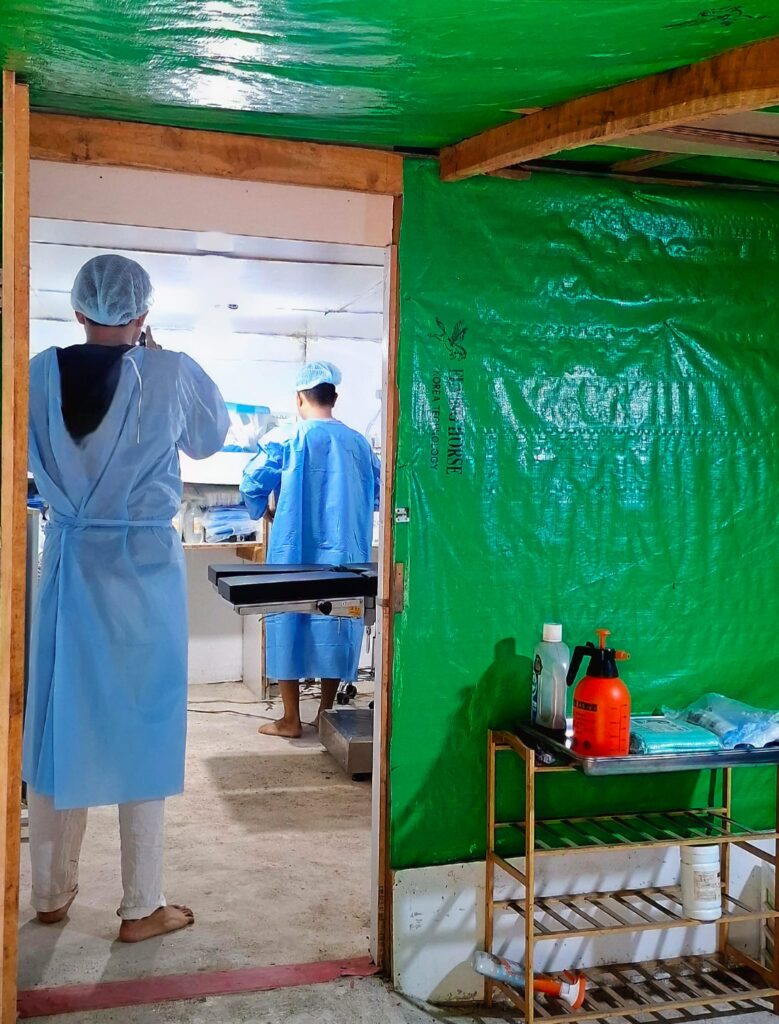
In the background, the rest of Dr. Drit’s team prepares for incoming casualties expected once the flying and fighting resume. Surgical instruments are sterilised, wound dressings are stacked, and the small operating room is thoroughly cleaned. Operating gowns, masks, gloves, and clean scrubs are packed and ready.
Dr. Drit formed the frontline clinic in early 2022 after junta soldiers and artillery attacked in December 2021, destroying most of the town of Lay Kay Kaw. Up until that attack, Dr. Drit had managed a 50-bed hospital alongside five other doctors taking part in the Civil Disobedience Movement against the regime.
One of those colleagues, Dr. Min, spent more than two years working at the frontline clinic. He bristles at negative media reports suggesting the resistance has faltered.
“Comrades working on the inside are not negative about the revolution. That talk is mostly generated by people who aren’t here or who have ulterior motives to see us fail,” he says. “They’ve never been to the resistance areas. They fled the country, and now they just scroll Facebook, drink tea, and talk nonsense. These teahouse warriors aren’t deeply involved in the revolution—they aren’t supporting us in any meaningful way.”
Dr. Min continues: “When we started our revolution, we had no guns or ammunition—only the motivation to fight for our freedom. ‘Experts’ gave us no chance against the junta. Yet here we are, years later, still contesting territory. Our comrades in the jungle—whether fighting or working as teachers and medics—are motivated. Their mindset is clear. They know how difficult it is every single day, but they want to see this through to the end.”
Dr. Min and the other doctors from Lay Kay Kaw remain active in raising funds, delivering medical aid, and assisting displaced communities. He notes that the upcoming battles will place further strain on their resources.
“We still need everything—clothing, tarpaulins, mats, mosquito nets, repellent, basic medical equipment like tourniquets, and large supplies of medicine.”
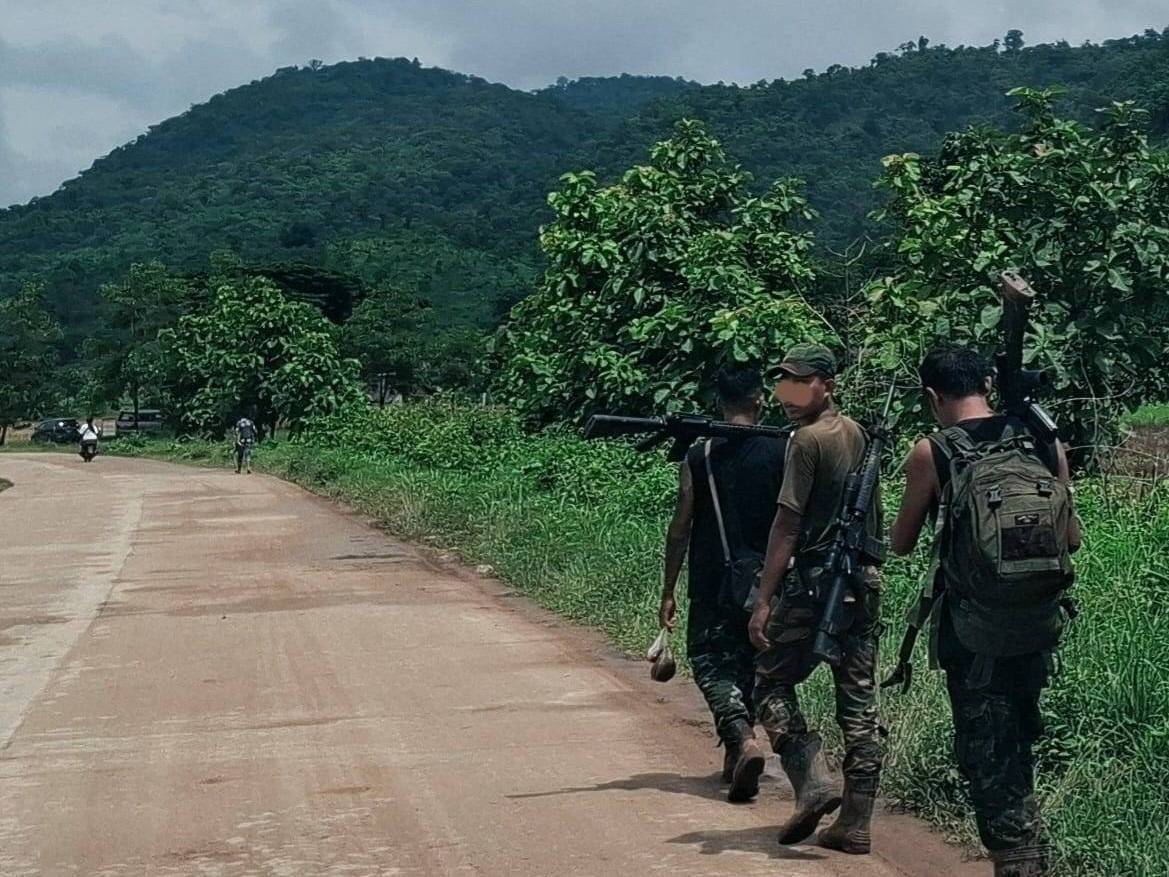
Convoys of pickup trucks packed with uniformed resistance fighters pass by heading toward the sound of distant explosions. The conversation pauses. Dr. Drit nods toward the trucks, noting that his medics and first responders will be busy in the coming days. He explains that the junta has sent around 2,000 soldiers to the area to link up with the DKBA and the Karen BGF in an attempt to regain control of lucrative border trade routes with Thailand.
‘First, we stop the bleeding’
Sayar San is a Cobra Column Ranger. Despite the constant danger of working as a first responder, he remains as defiant as the slogan on his T-shirt: “Fear No Evil”.
“We stay close to the front line and move in under fire to reach our injured comrades. The first 10 minutes are critical. We have to go in quick and get out quick. Our first priority is to stop the bleeding, assess the injury, and get the casualty to Dr. Drit’s clinic as fast as possible.”
Sayar San plays a video on his phone showing two young Cobra Column soldiers curled on the ground, hit by shrapnel from a drone attack. The camera sways wildly between sky and earth as the team races toward the men. Still-smoking dirt and debris are cleared away. Medics use surgical scissors to cut through camouflage trousers and shirts, revealing bodies peppered with coin-sized pieces of shrapnel. Sterile water is poured over the wounds.
One soldier has facial injuries; shock causes his leg to shake uncontrollably as the medics work. Within minutes, both men are bandaged, wrapped in warm coverings, loaded onto stretchers in the back of a pickup truck, and rushed to Dr. Drit’s clinic.
Sayar San points out that not everyone is so fortunate: “Not everyone can be rescued. Death is common. It’s dangerous—as many as 10 of my Cobra comrades have been killed.”
Sayar San works as he talks, organising equipment as his rescue team prepares for the next call. The steady sound of approaching artillery suggests a large-scale assault will soon be a reality.
Like many fighting on the frontline, Sayar San was driven to join by the military’s violent response to unarmed protesters in 2021.
“After the coup, our lives changed completely. I was a surveyor. We joined street protests to change the junta’s system of control over our lives. All we wanted was equality and freedom.”
Having spent years on the frontline, Sayar San says he stays motivated by the memory of his comrades’ sacrifices: “I think about my friends who have lost limbs or their lives. This is my revolutionary family—my brothers and sisters. I became a ranger because I want to keep them safe.”