The Myanmar junta has approached the Chinland Council to engage in peace talks, the council’s Foreign Affairs Minister, Dr. Sui Khar, said during a press conference last week.
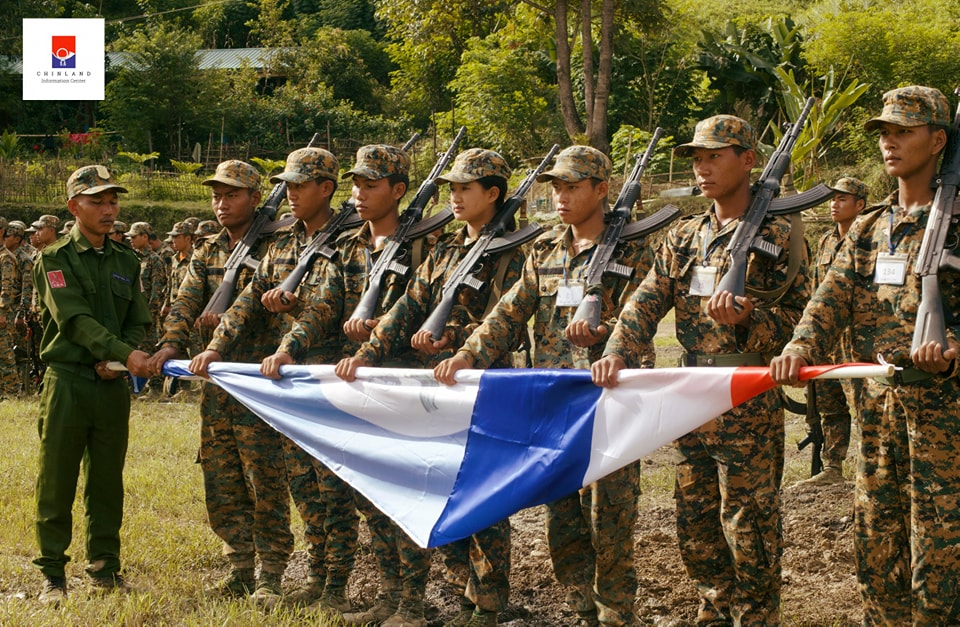
The Chinland Council is a coalition of Chin anti-regime forces, including members of the Chin National Front (CNF), local Chin defense forces, and elected MPs. The coalition controls the border town of Rikhawdar on the India-Myanmar border and a majority of rural areas in northern Chin State.
Chinland Council foreign minister Dr. Sui Khar spoke about the junta’s invitation during a press conference on August 28, which discussed the organisation’s activities over the past two and a half years.
He said that the regime sent officials to Aizawl in Mizoram State, India, to approach the Chin group through a third party, but did not disclose details, including when it occurred.
“They sent people all the way to Aizawl and approached us through the relevant third party,” Dr. Sui Khar said.
Myanmar Now contacted both the Chinland Council and junta spokesperson Brig-Gen San Nyo Win for further information on the attempted talks, but did not receive any responses.
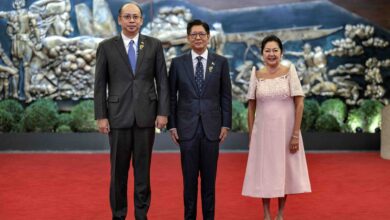
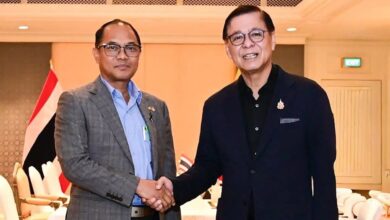
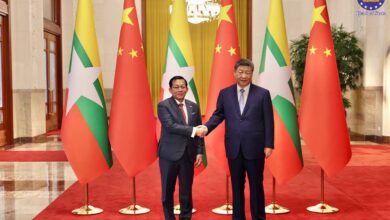
Since appointing himself president following military-controlled elections early this year, Min Aung Hlaing has reached out to numerous ethnic armed organizations (EAO) to hold so-called “peace talks”.
Regarding the attempted negotiations, Dr. Sui Khar said that the Chinland Council holds firm to the principles of the Steering Council for the Emergence of a Federal Democratic Union (SCEF), a newly formed alliance of anti-regime forces.
SCEF released a statement on July 15 stating that negotiations aimed only at reducing violence while ignoring the military’s dominance, dictatorship, and the underlying political crises, would not be sustainable.
“SCEF has already issued its policy paper regarding dialogue. We primarily stand by that. What Min Aung Hlaing is currently calling ‘peace’ is not actual peace. If they really want true peace, they should invite everyone broadly and inclusively. Inviting only EAOs while excluding others should not happen. That is why we stand firmly by SCEF’s policy,” Dr. Sui Khar said.
The SCEF was formed early this year by anti-junta resistance forces across the country, including the CNF. Other members include the Kachin Independence Organization, Karen National Union, Karenni National Progressive Party, the Committee Representing Pyidaungsu Hluttaw, and the publicly-mandated National Unity Government.
In late July, the junta stated that it had held ceasefire talks with the Chin National Organization/Chin National Defence Force (CNO/CNDF), a Chin armed force that emerged during the Spring Revolution.
However, the CNO issued a statement saying that the meeting took place without the organisation’s approval, and that the responsible chairman was immediately removed from his post as a result. The CNO, which is a member of another Chin coalition, the Chin Brotherhood, stated that it will not hold talks or political negotiations with the junta without the consent of allied resistance forces.
The Chin Brotherhood controls Matupi, Kanpetlet, and Mindat in southern Chin State, while its ally the Arakan Army (AA) controls Paletwa Township.
Although resistance forces managed to seize over 80 percent of Chin State, an intensified junta offensive in late 2025 has seen the military retake Falam, Tunzang, and Thantlang in northern Chin State this year.
The junta has simultaneously been attacking southern Chin State from Magway Region since mid-May, and airstrikes on civilian targets have continued.
On August 24, the junta carried out an airstrike on Sein Hyin Wa village in AA-controlled Paletwa Township where there is no active fighting, killing five locals, including young children, and injuring almost 20 others.