Myanmar’s military-appointed election commission has intensified restrictions on political parties following junta-organised elections held earlier this year, proposing stricter eligibility rules that critics say will further narrow political participation.
According to interviews with party leaders and documents obtained by Myanmar Now, the regime-controlled Union Election Commission (UEC) has ordered political parties to submit updated membership lists, verify the existence of party offices, and report contacts with foreign embassies and diplomats.
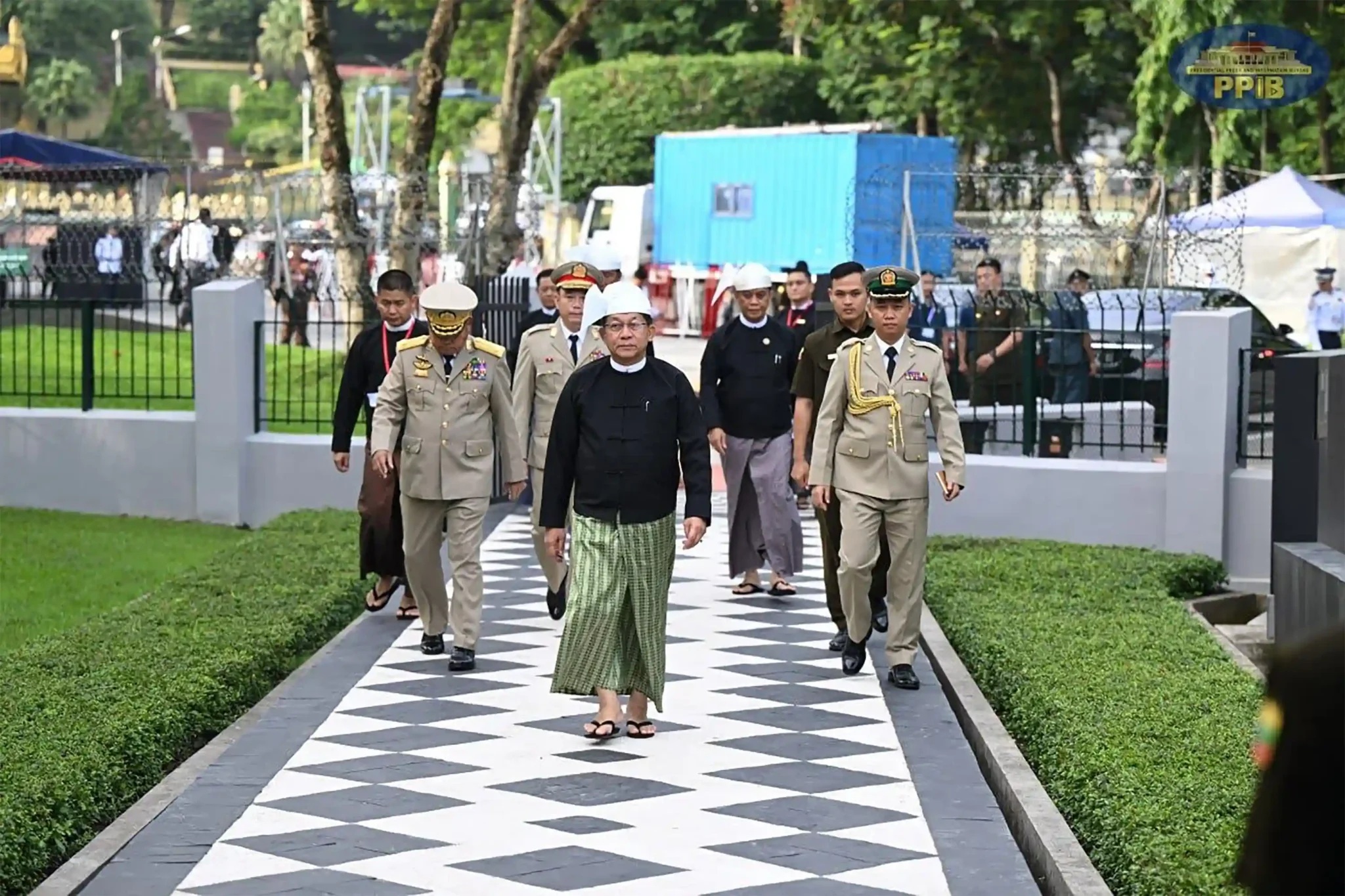
The measures follow junta chief Min Aung Hlaing’s assumption of the presidency in April and appear consistent with his previously stated goal of reducing the number of political parties.
Speaking at a junta meeting on January 23, 2023, Min Aung Hlaing said Myanmar had too many political parties and argued they should become “more compact,” saying parties should represent their supporters “in a united and strong manner.”
Political party leaders told Myanmar Now that restrictions introduced before the junta-held elections in late 2025 and early 2026 have continued and, in some cases, expanded.
Than Than Nu, chair of the Democratic Party, said the UEC has renewed directives requiring party leaders to notify authorities before meeting foreign diplomats or other foreign nationals.
“They sent them before the elections as well,” she said. “Now they’re issuing those directives again.”
Than Than Nu, daughter of Myanmar’s first post-independence prime minister U Nu, said she informed the UEC of her longstanding contacts with the Chinese, Indian, and Israeli embassies in Yangon, which she said stemmed from her father’s historical relationships with those countries.
The restrictions come after the UEC accused People’s Pioneer Party chair Thet Thet Khine of meeting diplomats without authorisation. In January, the commission said it would pursue legal action against her party under provisions that could result in its dissolution. She was also briefly detained and questioned.
Ordered to reorganise
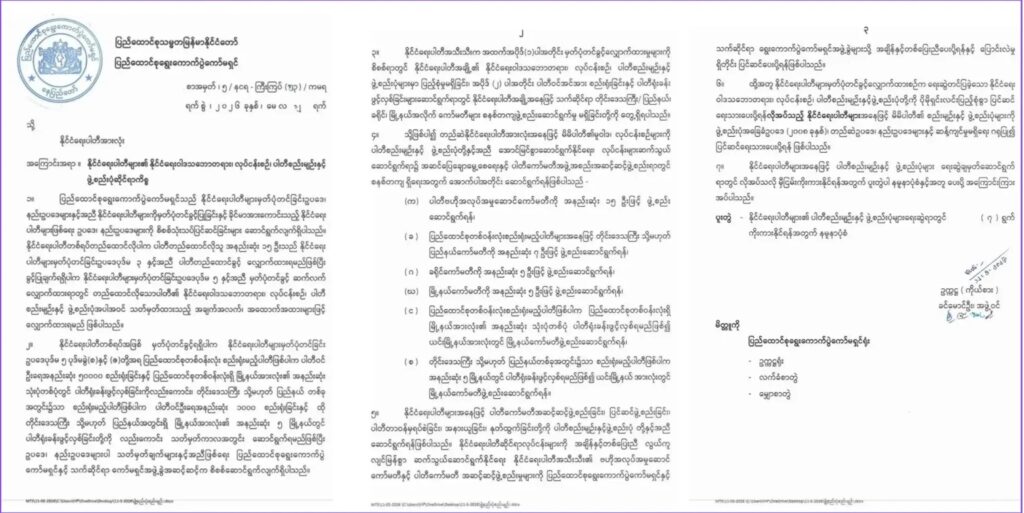
Myanmar Now also obtained a May 12 notification signed by UEC member Khin Maung Oo directing all political parties to reorganise and verify their internal structures.
The notice said some parties had failed to systematically establish regional, district, and township committees and instructed them to complete organisational structures at every administrative level.
Under UEC requirements, parties contesting elections nationwide must maintain at least 50,000 members and offices in 110 townships. Parties operating within a single state or region must have at least 1,000 members and offices in five townships.
Some ethnic political parties say those requirements are impossible to meet because large areas remain outside junta control.
Ba Shein, chair of the Rakhine Nationalities Party, said his party can officially operate only in the three Rakhine State townships controlled by the military. The remaining 14 townships are held by the Arakan Army.
“Instead of restrictions, relaxations are needed,” Ba Shein said. “We hoped things would become easier, but they’ve become tighter and more restrictive.”
The UEC dissolved four political parties, including the National Democratic Force, in September of last year after determining they had failed to meet membership requirements.
Party leaders said the commission is now conducting inspections and has ordered parties to resubmit membership lists by August 15.
“They want us to confirm whether the party offices established during the election period still exist,” said Kyaw Swar Soe, chair of the Myanmar Farmers Development Party. He said authorities are also checking whether party executive committees at township, district, and regional levels meet official requirements.
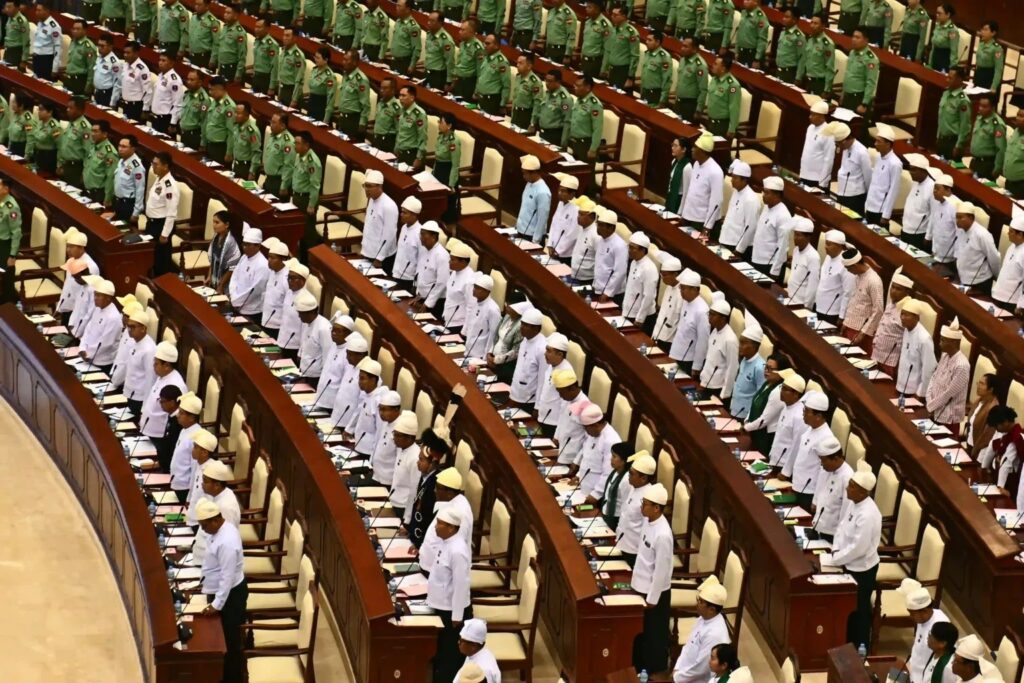
The commission has also proposed amendments to election laws that would significantly raise educational qualifications for parliamentary candidates and senior party officials.
Under draft legislation submitted this month, candidates for all legislatures would be required to hold degrees from universities, colleges, or degree colleges recognised by the state. The proposal would effectively limit eligibility to graduates of domestic institutions.
The amendments would also require party patrons and central executive committee members to meet the same educational qualifications.
Lost rights
If adopted, the changes would disqualify imprisoned National League for Democracy (NLD) leader Aung San Suu Kyi from serving as a member of parliament or party leader because her degrees were earned abroad, including at the University of Delhi and the University of Oxford.
Lawmakers from parties that participated in the junta-organised elections criticised the proposal.
“For those who are interested in politics and want to serve the country despite not having a degree, it feels like a loss of political opportunity,” said Mazoe Laung Wee, a lower house lawmaker from the Naga National Party.
Kyaw Swar Soe also opposed the proposal, arguing that educational requirements should not determine political participation.
“When working on national affairs, imposing things like ‘you must pass such-and-such grade’ causes citizens to lose their rights,” he said.
Sai Aik Pao, chair of the Shan and Nationalities Democratic Party, declined to comment directly on the UEC, saying he had previously faced official scrutiny after speaking publicly about election issues.
“I don’t want to talk about the UEC,” he said. “I can’t say anything.”
Myanmar Now attempted to contact UEC spokesperson Khin Maung Oo for comment but received no response.
The current UEC is chaired by former Maj.-Gen. Than Soe, who opposed many legislative initiatives during the NLD’s parliamentary majority before the military seized power in 2021.
Of the 57 political parties currently registered with the UEC, 51 operate only within a single state or region, while six are registered to compete nationwide.
The UEC has previously dissolved both the NLD and the Shan Nationalities League for Democracy, citing their failure to re-register under rules imposed after the military takeover. The two parties were widely regarded as among Myanmar’s most popular political organisations before the coup.