The military-backed Union Solidarity and Development Party (USDP) has claimed sweeping victories in the first phase of Myanmar’s junta-organised elections, even as official results have yet to be released.
The announced outcome—which few say was ever in doubt—comes after polls closed on Sunday evening in 102 townships under firm regime control.
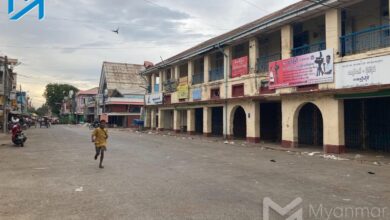
Large parts of the country were excluded due to ongoing fighting, and sources told Myanmar Now that turnout in major cities, including Yangon, was significantly lower than in previous elections.
Despite the absence of certified results from the junta-controlled Union Election Commission, preliminary tallies and statements from political parties indicate that the USDP had the lead in most constituencies where polling took place.
According to USDP sources, Mya Tun Oo, a former lieutenant general who previously served as the regime’s deputy prime minister and defence minister, won the Pyithu Hluttaw (lower house) seat in Mandalay Region’s Pyin Oo Lwin Township, securing more than half of the votes cast.

USDP General Secretary Thaung Aye said the party’s overall performance nationwide was “positive,” though he declined to provide detailed figures.
“The situation is good overall. Nationwide results haven’t been released yet, but generally speaking, the outlook is good,” he told Myanmar Now.
USDP leaders began publicly claiming victories across the country shortly after polls closed on Sunday evening. Hla Swe, the party’s chair for the administrative capital Naypyitaw, said the USDP had secured wins in multiple regions and states.
“Out of 76 polling stations in Pobbathiri Township in the capital, we lost only four, securing 72,” he said, adding that the party won in all eight townships in the Naypyitaw Union Territory, where more than 900,000 people were eligible to vote.
He also claimed the party was leading in Rakhine State and had won in Yangon and Magway regions and Karen, Karenni, Mon, Kachin, and eastern Shan states, while results in some areas were still being counted.
Rakhine nationalist loses
In Rakhine State, voting during the first phase was limited to three military-controlled townships—Sittwe, Kyaukphyu, and Manaung—while the remaining 14 townships remain under the control of the Arakan Army.
Dr Aye Maung, chair of the Arakan Front Party (AFP), said the USDP appeared to be in the lead in the state, though detailed results had not yet been released.
“We still don’t have consolidated polling station-level results, but overall the USDP is leading, followed by our party,” he said.
Once one of the state’s most popular Rakhine nationalist leaders, Aye Maung became close to the current regime after it seized power in February 2021. He confirmed that he lost his bid for the Amyotha Hluttaw (upper house) seat for Sittwe, the state capital, to the USDP.
He added that USDP candidates won both lower and upper house seats in the coastal town of Kyaukphyu, while the AFP secured victories in both the upper house and state parliament races in Manaung Township.
He said advance voting affected the outcome in Kyaukphyu, drawing comparisons to the 2010 general election, in which the USDP claimed a landslide victory.
In Hopong Township in southern Shan State, the Pa-O National Organisation—the political wing of the junta-aligned Pa-O National Army—won the Pyithu Hluttaw and state parliament seats under the first-past-the-post system, according to party sources. Its candidates also received the highest number of votes for the Amyotha Hluttaw.

Unsurprising result
Observers and political opponents of the regime said the USDP’s dominance came as no surprise, given the political environment created by the military since the 2021 coup.
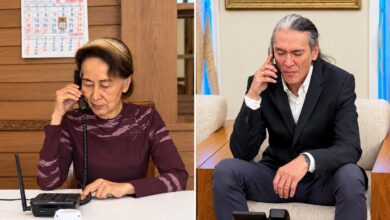
Members of the ousted ruling party, the National League for Democracy (NLD)—whose leaders, including Aung San Suu Kyi, remain detained—dismissed the vote as a sham.
Bo Bo Oo, vice chair of the NLD’s Sanchaung Township executive committee, said election laws enacted by the junta in 2023 were even more restrictive than those used during the military-backed 2010 election.
“This is an era where people are arrested one day and their bodies returned the next,” he said. “Under these conditions, there is no reason to believe this is a genuine multiparty democratic election.”
USDP chair Khin Yi had earlier warned that any government not closely aligned with the military would collapse, saying at a campaign event on November 11 that a civilian administration unable to work “shoulder to shoulder” with the armed forces would quickly fall.
Shortly after casting his own vote on Sunday, junta chief Min Aung Hlaing insisted the election was free and fair, telling selected media outlets that the military would not allow its reputation to be damaged by a flawed vote.
“We guarantee that this election is free and fair,” he said.
The election is scheduled to take place in three phases. The second phase is set for January 11, followed by a third phase on January 25. Min Aung Hlaing said assessments of the election’s fairness should wait until all three phases are completed.