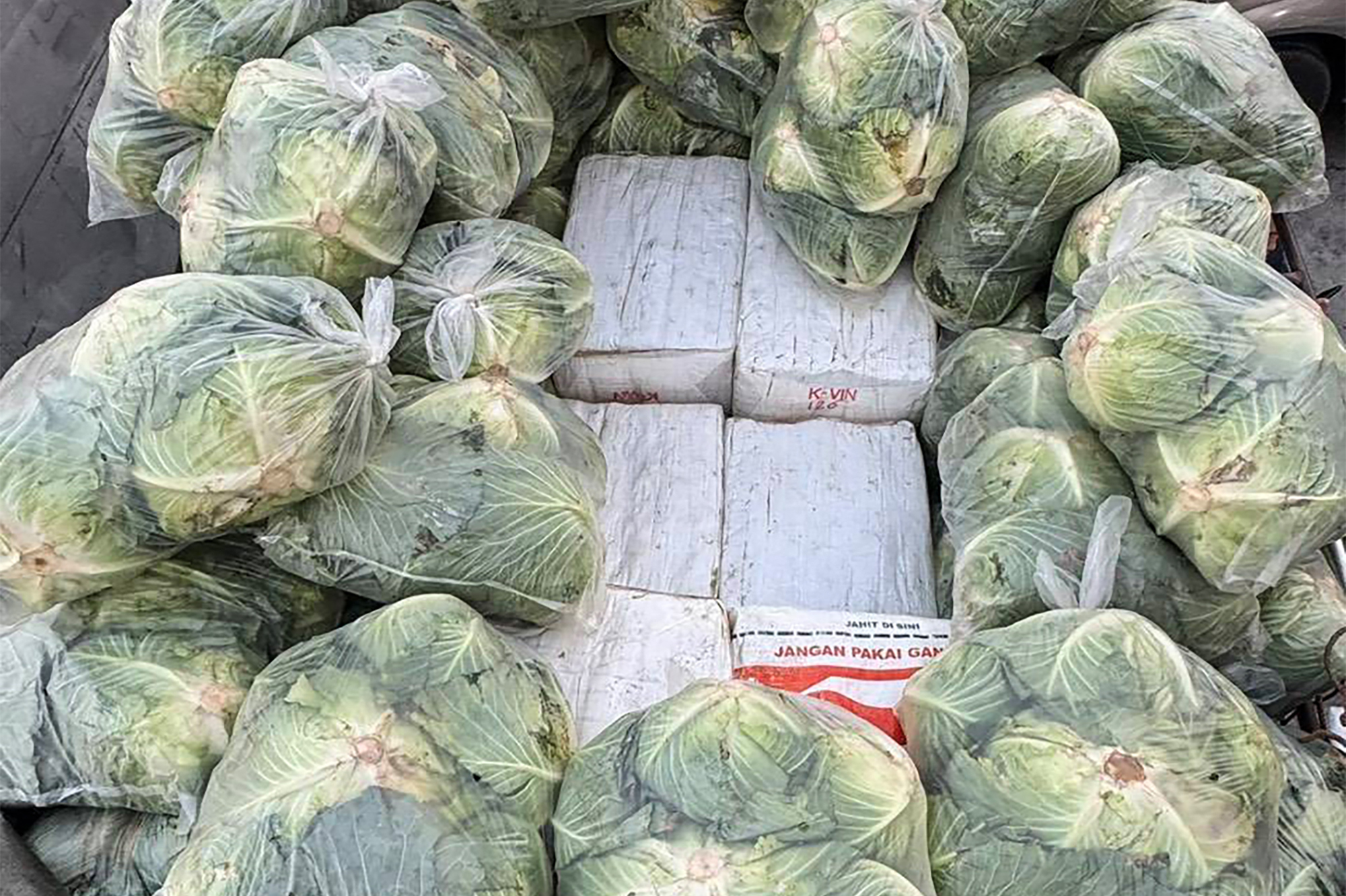
Thai police have seized 1.6 tonnes of ketamine and crystal methamphetamine buried under cabbages in the bed of a pickup truck, with the driver arrested on drug trafficking charges.
The Thai man, aged 39, was arrested over the weekend when he stopped his truck at a petrol station in central Ayutthaya province, police said.
Authorities found 900 kilograms (one US ton) of ketamine and 700 kilograms of crystal methamphetamine in packages hidden underneath bags of the leafy vegetable, Bangkok police said in a statement on Sunday.
The driver, who was arrested on Saturday, confessed that he was hired to transport the drugs for 100,000 baht ($3,000), police said.
The drug trafficking charges carry a maximum sentence of 15 years to life in prison.
Police said they suspected the drugs were trafficked from a neighbouring country, without specifying which one.
Thailand is a major hub for illegal drug trafficking in Southeast Asia, and police raids and seizures of hard narcotics such as heroin and methamphetamine are common.
The UN Office on Drugs and Crime (UNODC) said a record 236 tons of methamphetamine were seized in East and Southeast Asia in 2024 — a 24 percent rise from the previous year.
Thailand was the “main transit and destination point for methamphetamine” trafficked from neighbouring Myanmar and has recorded the largest quantity of seized meth in the region, according to UNODC.
A decade of reporting at a cost
In 2025, we marked the 10th anniversary of Myanmar Now. In Myanmar’s history, journalists are often the first targets during political repression. We founded this outlet during a brief window of stability, starting with a small team in a modest office in downtown Yangon. Our goal was simple: to report on injustices that had been silenced for decades. In many countries, justice is sought through courts and police. In Myanmar, these institutions have historically been instruments of oppression.
From the start, we committed to reporting without discrimination—regardless of ethnicity, religion, or citizenship. We believe our work should be accurate, deeply sourced, and strong enough to serve as a historical record.
We also believe journalism should be a force for positive change, and that our primary readers should be the people of Myanmar.
That belief came at a cost. Members of our team and others associated with Myanmar Now have endured long legal battles, physical assaults, arrests, and torture. Despite these hardships, Myanmar Now continues to report the news—thanks to the resilience of our team, the courage of our sources, and the trust of our readers.
Please subscribe to support a free press in Myanmar.